


For many British women, maintaining youthful skin and combating the first signs of ageing often starts with changing daily routines. As research from Oxford Population Health confirms, lifestyle choices influence skin health more than genetic predispositions. Understanding which habits to adjust empowers you to improve skin elasticity naturally. This guide offers clear steps for assessing your current health, selecting safe collagen supplements, and building a regimen that supports firmer, healthier skin over time.
Table of Contents
- Step 1: Assess Current Skin Health And Lifestyle Habits
- Step 2: Incorporate High-Quality Liquid Collagen Supplements
- Step 3: Adopt A Nutrient-Rich Diet Supporting Skin Elasticity
- Step 4: Integrate Effective Hydration And Topical Care Routines
- Step 5: Monitor Improvements And Adjust Your Regimen Accordingly
Quick Summary
| Key Point | Explanation |
|---|---|
| 1. Assess Your Skin Health | Evaluate diet, sleep, stress, and environmental factors affecting skin elasticity. |
| 2. Use Quality Liquid Collagen | Select high-quality, absorbable liquid collagen supplements to support skin health. |
| 3. Follow a Nutrient-Rich Diet | Incorporate proteins, antioxidants, healthy fats, and hydration to promote skin resilience. |
| 4. Implement Effective Skincare | Use appropriate moisturisers and serums to enhance hydration and protect skin. |
| 5. Monitor and Adapt Your Routine | Track skin changes and lifestyle factors to refine your approach for better results. |
Step 1: Assess current skin health and lifestyle habits
Improving skin elasticity starts with a comprehensive understanding of your current health status and lifestyle patterns. This crucial first step involves carefully evaluating how your daily habits impact your skin’s natural resilience and ageing process.
To effectively assess your skin health, begin by examining key lifestyle factors through a systematic approach. NHS lifestyle health evaluation provides an excellent framework for understanding your personal health baseline. Consider the following critical areas:
- Diet quality: Assess your nutritional intake and hydration levels
- Sleep patterns: Evaluate duration and quality of nightly rest
- Physical activity: Track your weekly exercise routines
- Stress management: Understand your current stress levels and coping mechanisms
- Environmental exposures: Review potential skin-damaging factors like pollution, UV exposure
Your lifestyle choices significantly influence skin health more than genetic predispositions.
Research from Oxford Population Health highlights that modifiable lifestyle factors play a critical role in biological ageing. By understanding these interconnected elements, you can develop targeted strategies to enhance skin elasticity naturally.
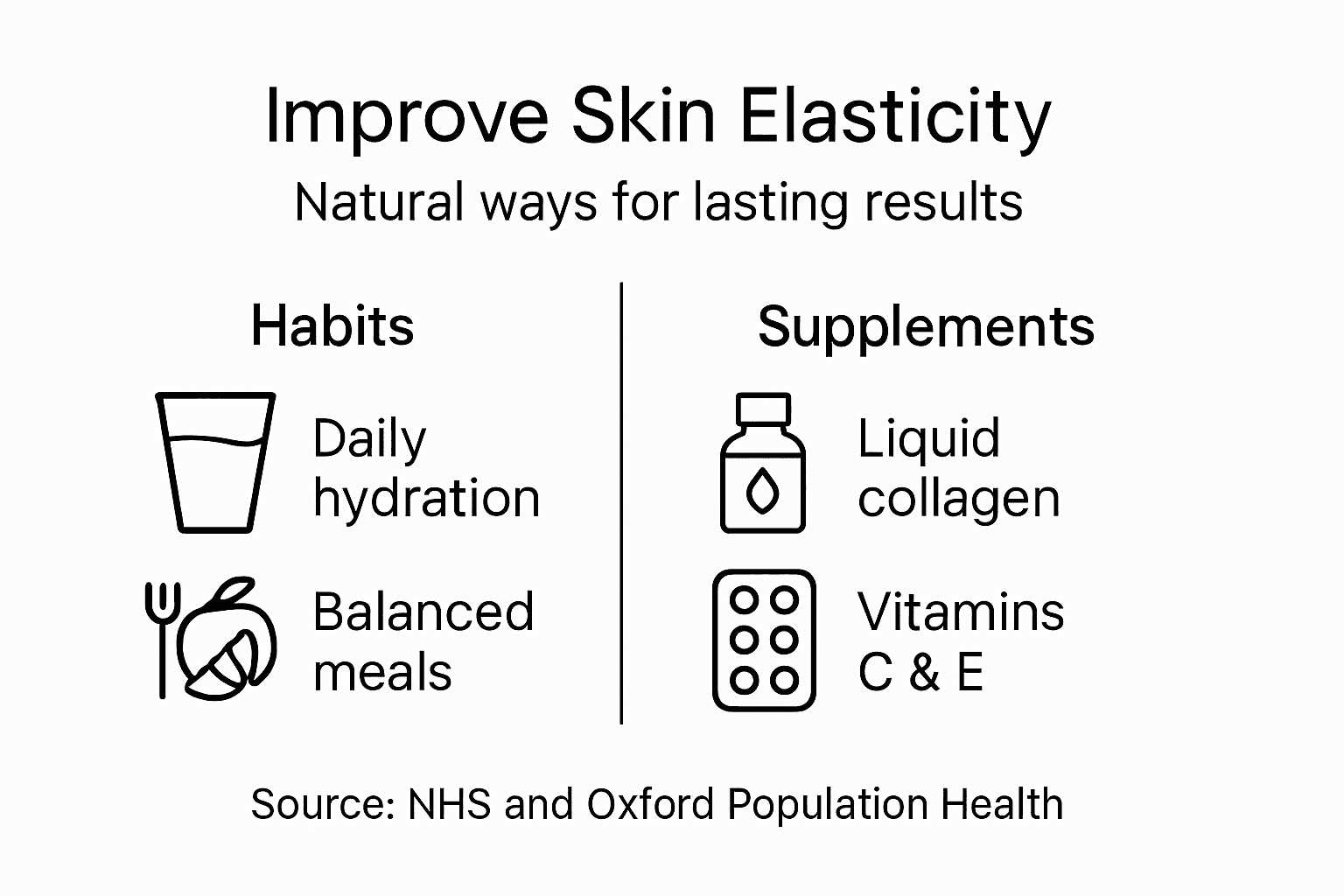
Documenting your current habits through a detailed journal can provide invaluable insights into potential areas of improvement. Track your daily routines, noting sleep quality, nutrition, stress levels, and skin appearance to create a comprehensive health profile.
Top tip: Create a weekly wellness tracker to monitor your lifestyle habits and their direct impact on skin health and elasticity.
Here is a summary of key internal and external factors impacting skin elasticity:
| Factor Type | Examples | Impact on Skin Elasticity |
|---|---|---|
| Internal | Nutrition, hydration, sleep, stress | Supports collagen and repair |
| External | UV rays, pollution, skincare products | Affects barrier and ageing speed |
| Lifestyle Habits | Exercise, substance use, routine | Influences regeneration and damage |
| Topical Treatments | Moisturisers, serums, sun protection | Enhances moisture and resilience |
Step 2: Incorporate high-quality liquid collagen supplements
Transitioning from assessing your skin health to actively improving its elasticity requires strategic supplementation with liquid collagen. Liquid collagen supplements offer a convenient and potent method to support your skin’s natural regenerative processes and combat age-related changes.
When selecting a liquid collagen supplement, focus on understanding the regulatory standards for collagen consumption to ensure product quality and safety. Consider the following key selection criteria:
- Protein source: Choose supplements derived from high-quality, approved animal sources
- Absorption rate: Select liquid formats for superior bioavailability
- Purity: Look for supplements free from unnecessary additives
- Concentration: Check the protein content per serving
- Third-party testing: Prioritise brands with independent quality verification
Liquid collagen can be a powerful addition to your skin health strategy when selected thoughtfully.
To maximise benefits, integrate liquid collagen supplements into your daily routine with consistency. Recommended approaches include:
- Take supplement at the same time daily
- Combine with balanced diet rich in proteins
- Stay hydrated to support collagen absorption
- Monitor skin changes over several weeks
Understanding that supplement efficacy varies, approach liquid collagen as part of a holistic skin health strategy. Combine supplementation with proper nutrition, hydration, and skincare practices for optimal results.
Top tip: Maintain a journal to track your skin’s response and supplement consistency for personalised insights.
Step 3: Adopt a nutrient-rich diet supporting skin elasticity
Building on your collagen supplementation, crafting a targeted nutritional strategy becomes crucial for enhancing skin elasticity from within. A carefully designed diet can provide the essential building blocks your skin needs to maintain its youthful resilience and repair mechanisms.
Following healthy eating guidelines for optimal nutrition, focus on consuming a diverse range of nutrients that directly support skin health. Your diet should encompass key components that promote collagen production and protect existing skin proteins:
- Protein sources: Lean meats, fish, eggs, and plant-based proteins
- Antioxidant-rich foods: Berries, leafy greens, and colourful vegetables
- Healthy fats: Avocados, nuts, olive oil, and fatty fish
- Vitamin-dense ingredients: Citrus fruits, bell peppers, and sweet potatoes
- Hydration: Water and herbal teas to support cellular function
Nutrition is the foundation of skin health, working from the inside out to maintain elasticity and vitality.
The government’s dietary recommendations emphasise balancing micronutrients critical for skin repair. Prioritise foods rich in vitamins A, C, D, and zinc, which play pivotal roles in collagen synthesis and skin regeneration.

Design your meals to create a holistic approach to skin health. Consider preparing weekly meal plans that incorporate these nutrient-dense foods strategically. Aim to include a variety of colours, textures, and nutritional profiles to ensure comprehensive support for your skin’s elasticity and overall wellness.
Top tip: Prep weekly meal plans that combine collagen-supporting nutrients for consistent skin nourishment.
Step 4: Integrate effective hydration and topical care routines
Enhancing skin elasticity requires a strategic approach to external skincare that complements your internal nutritional efforts. Targeted topical treatments work synergistically with your dietary and supplementation strategies to support skin resilience and moisture retention.
Understanding emollient treatments for skin hydration becomes crucial in maintaining your skin’s protective barrier. Different formulations offer unique benefits for various skin types:
- Lightweight lotions: Perfect for oily and combination skin
- Rich creams: Ideal for dry and mature skin
- Hydrating serums: Provide concentrated moisture
- Night-time treatments: Support skin repair during rest
- Protective moisturisers: Shield against environmental stressors
Consistent topical care is your skin’s daily defence against premature ageing.
Implement a comprehensive routine that addresses multiple aspects of skin hydration. The NHS recommendations for skin treatment emphasise creating a protective moisture barrier that prevents water loss and supports natural skin regeneration.
Structure your skincare routine with intentional layering. Start with lightweight, water-based products and progress to richer, more occlusive treatments. Pay special attention to areas prone to dryness and fine lines, such as around the eyes and neck.
Top tip: Apply moisturiser to slightly damp skin to lock in maximum hydration and enhance absorption.
The table below compares different topical product types for hydration and their ideal uses:
| Product Type | Suitable For | Primary Benefit |
|---|---|---|
| Lightweight lotion | Oily/combination skin | Quick absorption, non-greasy |
| Rich cream | Dry/mature skin | Deep moisture, barrier repair |
| Hydrating serum | All skin types | Intensive hydration, light feel |
| Night treatment | All except sensitive | Supports overnight repair |
| Protective cream | Urban/outdoor settings | Shields from environmental stress |
Step 5: Monitor improvements and adjust your regimen accordingly
Tracking your skin’s transformation requires a systematic and patient approach to understanding how your lifestyle interventions impact skin elasticity. Consistent monitoring becomes the cornerstone of achieving sustainable, long-term skin health improvements.
Utilise the Dermatology Life Quality Index as a comprehensive framework for evaluating your skin’s progress. Create a structured tracking system that captures multiple dimensions of skin health:
- Photographic documentation: Weekly close-up images
- Moisture level measurements: Using skin hydration tools
- Elasticity assessment: Gentle skin pinch test
- Texture evaluation: Noting changes in smoothness
- Subjective comfort ratings: Personal perception of skin feel
Small, consistent changes lead to significant long-term skin transformations.
The Health Survey for England emphasises the importance of holistic health tracking. Integrate your skin health observations with broader lifestyle metrics such as sleep quality, stress levels, and nutritional intake.
Remember that skin improvement is not linear. Some interventions might show immediate results, while others require weeks or months of consistent application. Be patient, maintain detailed records, and remain open to adjusting your approach based on empirical observations.
Top tip: Create a digital or physical journal to track your skin health journey, noting both objective measurements and subjective experiences.
Unlock Radiant Skin Elasticity with KUDU Nutrition
Struggling to maintain your skin’s natural bounce and resilience can feel frustrating, especially when lifestyle factors and ageing take their toll. This article highlights how critical it is to assess your daily habits and complement them with effective solutions that support collagen regeneration and skin hydration. If you are seeking a trusted, high-quality collagen supplement that fits seamlessly into your wellness routine, KUDU Nutrition offers just that.
Discover the power of our liquid collagen protein sachets, designed to provide superior absorption and support enhanced skin elasticity, joint health, and fitness recovery. With a high collagen content, great taste and Informed Sport quality certification, these supplements help you take immediate and consistent action toward glowing, supple skin. Start transforming your skin health today by visiting KUDU Nutrition and make collagen supplementation a natural part of your daily routine. Experience the difference in your skin’s texture and elasticity with every dose.
Frequently Asked Questions
How can I assess my current skin health to improve elasticity?
To assess your current skin health, evaluate key lifestyle factors such as diet quality, sleep patterns, physical activity, stress levels, and environmental exposures. Start by keeping a detailed journal to track these aspects and identify areas for improvement.
What type of liquid collagen supplement should I choose for skin elasticity?
Select a liquid collagen supplement derived from high-quality animal sources, prioritising products with superior absorption rates and minimal additives. Opt for a daily serving that contains a high concentration of collagen to maximise your skin’s elasticity benefits.
What foods should I include in my diet to support skin elasticity?
Incorporate protein sources like lean meats and fish, antioxidant-rich foods such as berries and leafy greens, and healthy fats like avocados and nuts into your meals. Aim to create weekly meal plans that include a variety of these nutrient-dense foods to sustain skin health and elasticity.
How can I improve my skin’s hydration through topical treatments?
Enhance skin hydration by integrating a consistent topical care routine that includes lightweight lotions for oily skin and rich creams for dry skin. Ensure you apply these products to slightly damp skin to lock in moisture and maintain a healthy skin barrier.
How do I track improvements in my skin elasticity?
Monitor your skin’s changes by taking weekly photographs, measuring moisture levels, and performing elasticity assessments using the pinch test. Keep a detailed journal of these observations to track progress and adjust your regimen as needed.
How long will it take to see results in skin elasticity?
You may start observing improvements in your skin elasticity within 30–60 days of consistently following a targeted regimen that includes proper nutrition, supplementation, and topical care. Stay patient and continue to track changes to ensure lasting results.


