


Finding ways to stay active without constant aches becomes a real priority as you move through your thirties and forties in the UK. Everyday life, from demanding jobs to fitness routines, often puts extra pressure on your joints, making comfort and flexibility crucial for enjoying each moment. With so many options and myths around joint care, this guide brings you clear, research-backed insights on collagen’s essential role in supporting joint health and practical tips for maintaining your mobility, recovery, and beauty goals.
Table of Contents
- Defining Joint Health And Common Misconceptions
- Major Types Of Joint Problems In Adulthood
- How Collagen Supports Joint Function
- Lifestyle Factors Impacting Joint Wellness
- Risks Of Ignoring Joint Health In Midlife
- How To Choose Effective Joint Supplements
Key Takeaways
| Point | Details |
|---|---|
| Joint Health Misconceptions | Many believe that pain always indicates permanent damage, whereas proactive care can maintain joint function throughout life. |
| Common Joint Conditions | Osteoarthritis and Rheumatoid Arthritis are prevalent, with early intervention crucial for preventing further degeneration. |
| Collagen’s Role | Collagen is vital for joint health, supporting elasticity and reducing inflammation, particularly with supplementation. |
| Lifestyle Impact | A diverse exercise routine, balanced nutrition, and proper posture significantly contribute to joint wellness and mobility. |
Defining Joint Health and Common Misconceptions
Joint health represents a complex physiological system involving multiple body structures that enable movement, shock absorption, and flexibility. Far more than simple connections between bones, joints are intricate mechanisms requiring consistent care and understanding.
According to research on musculoskeletal concerns, joint health management involves addressing pain, stiffness, and maintaining optimal mobility. Joints comprise cartilage, ligaments, tendons, and synovial fluid working harmoniously to support dynamic physical activities. When these components function effectively, individuals can move smoothly and without discomfort.
Contrary to popular belief, many widespread misconceptions prevent people from maintaining healthy joints. Movement myths about joint wear suggest activities like running damage knees permanently, when scientific evidence demonstrates that controlled, appropriate exercise actually supports joint strength and resilience. The human body adapts to consistent, moderate physical activity, reinforcing joint structures through improved blood circulation and strengthened supporting muscles.
Common joint health misconceptions include believing that pain always indicates permanent damage, or that reduced mobility is an inevitable consequence of ageing. In reality, proactive nutrition, targeted exercises, and understanding body mechanics can significantly preserve joint function well into later life stages.
Pro tip: Incorporate gentle, low-impact movements like swimming or cycling to maintain joint flexibility without excessive stress on cartilage and connective tissues.
Major Types of Joint Problems in Adulthood
Adult joint health encompasses a range of complex musculoskeletal conditions that can significantly impact mobility and quality of life. Understanding these conditions helps individuals recognise early warning signs and seek appropriate interventions before problems become chronic or debilitating.

Research highlights ten common joint problems affecting active adults, with certain conditions standing out as particularly prevalent. Osteoarthritis emerges as the most common degenerative joint disease, characterised by gradual cartilage breakdown and increased inflammation. This condition predominantly affects weight-bearing joints like knees and hips, causing progressive stiffness and discomfort.
Rheumatoid arthritis represents another significant joint challenge, distinguished by an autoimmune response that triggers systemic inflammation. Unlike osteoarthritis, this condition can affect multiple joints simultaneously and involves the body’s immune system attacking joint linings. Joint pain diagnostic criteria indicate that persistent swelling, morning stiffness lasting over an hour, and symmetrical joint involvement are typical markers of this complex condition.
Additional joint problems include gout, a metabolic disorder causing sudden, intense joint pain typically in the big toe, and bursitis, which involves inflammation of the fluid-filled sacs cushioning joints. Tendinitis also frequently impacts active adults, representing inflammation of the tissues connecting muscles to bones and often resulting from repetitive movements or sudden injuries.
Pro tip: Maintain a detailed symptom diary tracking joint pain duration, intensity, and potential triggers to provide comprehensive information during medical consultations.
Here is a comparison of major adult joint conditions and their typical characteristics:
| Condition | Key Features | Typical Age Group | Distinctive Symptoms |
|---|---|---|---|
| Osteoarthritis | Cartilage breakdown, stiffness | Over 40 years | Gradual pain, swelling |
| Rheumatoid arthritis | Autoimmune inflammation | 30-60 years | Morning stiffness, symmetry |
| Gout | Metabolic uric acid excess | Over 40 years | Sudden intense toe pain |
| Bursitis | Bursal sac inflammation | All adults | Local swelling, movement pain |
| Tendinitis | Tendon tissue irritation | Active adults | Pain after repetitive motion |
How Collagen Supports Joint Function
Collagen serves as a fundamental building block for maintaining optimal joint health, acting as a critical protein that provides structural integrity and support throughout the musculoskeletal system. This essential protein plays a pivotal role in ensuring joints remain flexible, resilient, and capable of withstanding regular physical activity.
Collagen structural protein research demonstrates its crucial function in maintaining cartilage, tendon, and ligament health. The protein provides essential strength and elasticity to joint tissues, helping to cushion and protect against wear and tear. By contributing to the structural framework of joints, collagen enables smoother movement and reduces the potential for degenerative changes that can limit mobility.
Recent scientific investigations reveal that collagen supplementation benefits extend beyond basic structural support. The protein’s peptides actively promote collagen synthesis within the body, simultaneously reducing inflammation and supporting tissue repair mechanisms. This process is particularly significant for individuals maintaining active lifestyles, as it helps mitigate potential joint damage and supports faster recovery from physical stress.
The amino acid composition of collagen makes it uniquely positioned to support joint regeneration. Different collagen types specifically target various joint structures, with Type II collagen being particularly effective for cartilage maintenance. These proteins work synergistically to maintain joint lubrication, reduce friction between moving parts, and support the body’s natural healing processes.
Pro tip: Consider consuming collagen supplements consistently and pairing them with vitamin C to enhance protein absorption and maximise joint health benefits.
Lifestyle Factors Impacting Joint Wellness
Joint wellness extends far beyond simple exercise, encompassing a holistic approach to maintaining mobility, strength, and overall musculoskeletal health. Understanding the intricate relationship between lifestyle choices and joint function is crucial for preventing long-term mobility challenges and maintaining an active, pain-free existence.
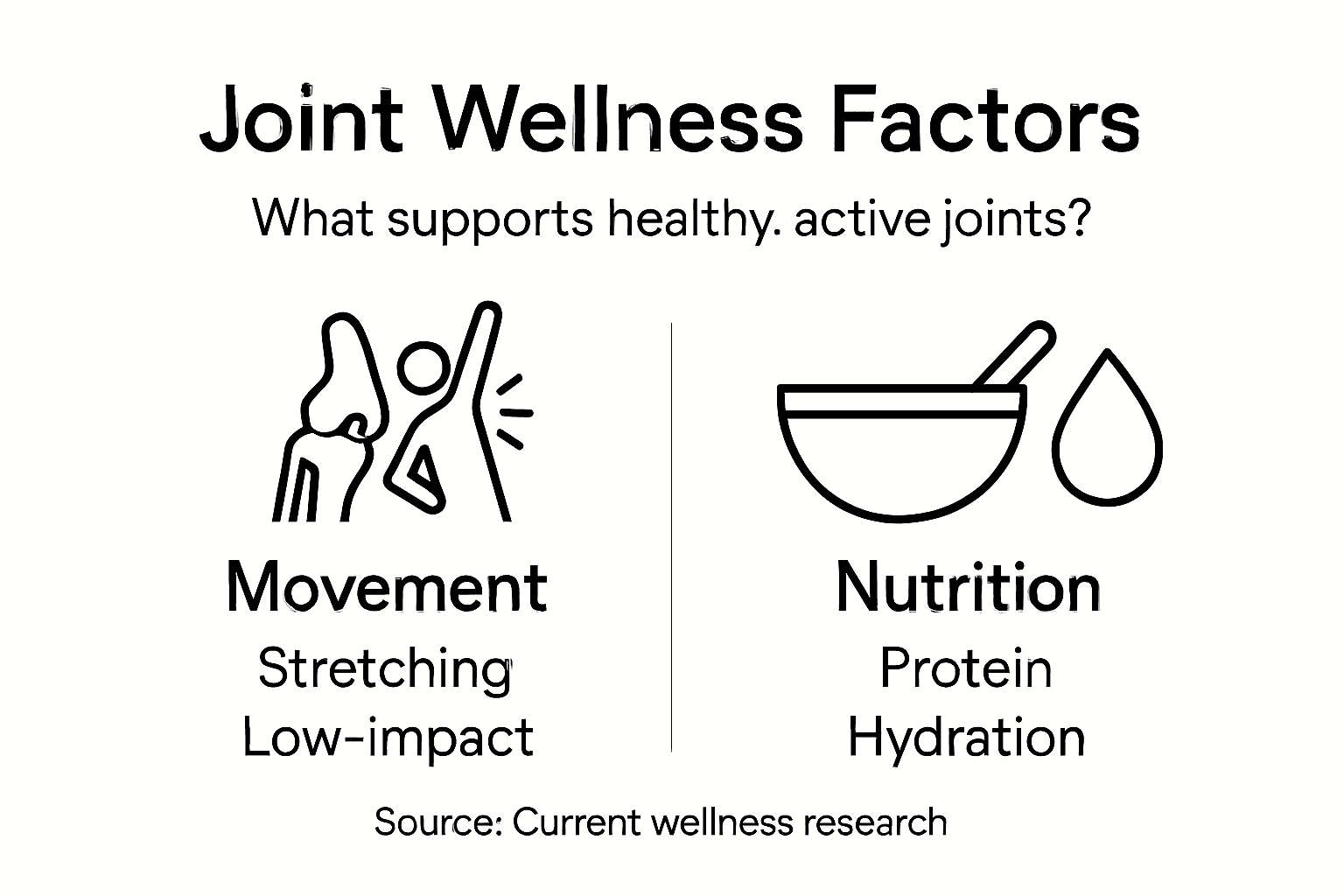
Movement variety and joint health demonstrate that consistent, diverse physical activities are fundamental to joint wellness. Repetitive movements or prolonged sedentary behaviours can dramatically reduce joint range and function, leading to stiffness and increased vulnerability to injury. Alternating between different types of exercise, such as swimming, cycling, and strength training, helps distribute mechanical stress across various joint structures.
Nutritional strategies play a pivotal role in supporting joint health. Strength training and dietary approaches highlight the importance of consuming nutrients that directly support joint tissue repair. Vitamins D and C, omega-3 fatty acids, and protein-rich foods contribute to maintaining cartilage integrity and reducing inflammatory responses. Additionally, maintaining a healthy body weight significantly reduces unnecessary stress on weight-bearing joints like knees and hips.
Posture and movement mechanics represent another critical lifestyle factor. Improper sitting positions, repetitive work-related movements, and inadequate ergonomic support can progressively damage joint structures. Incorporating regular stretching, maintaining neutral spine alignment, and being mindful of body mechanics during physical activities can mitigate potential long-term joint degradation.
Pro tip: Implement a daily mobility routine with gentle stretches and range-of-motion exercises to maintain joint flexibility and prevent stiffness.
Risks of Ignoring Joint Health in Midlife
Middle age represents a critical period when joint health transitions from passive maintenance to active preservation. Individuals who overlook early warning signs and dismiss joint care as a priority are unknowingly setting the stage for potentially irreversible musculoskeletal challenges that can dramatically impact quality of life.
Joint health progression research reveals that neglecting joint wellness in midlife significantly increases risks of chronic conditions like osteoarthritis. Without proactive intervention, joint deterioration accelerates, leading to decreased mobility, persistent pain, and reduced physical independence. The cumulative effect of ignoring joint health can transform what might have been manageable discomfort into profound functional limitations.
Osteoarthritis risks become increasingly pronounced during midlife, with symptom progression and management highlighting the critical nature of early detection and lifestyle modifications. Untreated joint issues can lead to structural damage, joint deformity, and significant reductions in overall physical capacity. The body’s natural regenerative processes slow down, making each ignored symptom potentially more consequential than in younger years.
Psychological impacts accompany physical joint health deterioration, with reduced mobility often leading to decreased social engagement, potential weight gain, and increased risk of depression. The compounding effects of joint neglect extend far beyond physical discomfort, potentially undermining an individual’s sense of personal autonomy and lifestyle enjoyment.
Pro tip: Schedule an annual joint health assessment with a healthcare professional to track mobility, identify early warning signs, and develop personalised prevention strategies.
How to Choose Effective Joint Supplements
Navigating the complex world of joint supplements requires a strategic approach, balancing scientific evidence, personal health needs, and understanding the nuanced interactions between nutritional support and joint function. Choosing the right supplement is not about finding a universal solution, but discovering a personalised strategy that addresses individual joint health requirements.
Joint supplement selection criteria emphasise the importance of evidence-based ingredients and professional guidance. Key ingredients to consider include collagen peptides, glucosamine, chondroitin, and omega-3 fatty acids, each offering unique benefits for joint maintenance and repair. Scientifically validated supplements should demonstrate measurable improvements in joint mobility, inflammation reduction, and cartilage support.
Quality assessment becomes crucial when selecting joint supplements. Look for products with transparent ingredient lists, third-party testing certifications, and clear dosage recommendations. Bioavailability matters significantly; supplements containing easily absorbed peptide forms of nutrients will likely provide more effective support than standard formulations. Factors like molecular weight, extraction method, and additional complementary nutrients can dramatically influence a supplement’s overall efficacy.
Individual health profiles play a critical role in supplement selection. Age, existing joint conditions, activity levels, and potential medication interactions must be carefully considered. Consulting healthcare professionals provides personalised insights into which supplement formulations might work best for specific joint health goals, ensuring safe and targeted nutritional support.
To enhance decision-making, here are key factors when evaluating joint supplements:
| Factor | Why It Matters | What To Check |
|---|---|---|
| Ingredient Evidence | Supports joint function effectively | Clinical studies, published research |
| Bioavailability | Ensures absorption and efficacy | Peptide form, digestibility |
| Quality Assurance | Minimises harmful additives | Third-party testing, certifications |
| Personal Suitability | Addresses specific health needs | Age, existing joint issues, allergies |
Pro tip: Request laboratory testing or detailed ingredient analysis from supplement manufacturers to verify the precise nutritional composition and absorption potential of joint health products.
Support Your Active Lifestyle with Targeted Joint Care
The article highlights the crucial challenge of maintaining joint health amid active lifestyles, especially as ageing and daily wear threaten flexibility and comfort. If you are experiencing stiffness, pain, or want to proactively support your joints to prevent conditions like osteoarthritis or tendinitis, understanding the role of collagen is key. Collagen’s contribution to cartilage strength, joint lubrication, and tissue repair makes it an essential nutrient for preserving mobility and enabling comfortable movement.
KUDU Nutrition offers a high-quality solution with their 20g Collagen Protein 14 Pack sachets. These collagen supplements are specially crafted to deliver a potent dose of collagen peptides that support joint resilience and recovery. Certified by Informed Sport and designed for taste and absorption, this product helps you meet your joint health goals and maintain an active, pain-free life.

Take charge of your joint wellness today by incorporating reliable collagen support into your routine. Explore the benefits and see how consistency can enhance your joint flexibility and long term mobility with this collagen protein formula. Start now to protect your joints and enjoy the freedom of movement that your body deserves.
Frequently Asked Questions
What are the common misconceptions about joint health?
Many people believe that joint pain always indicates permanent damage or that reduced mobility is an inevitable factor of ageing. In reality, proactive nutrition and targeted exercises can significantly preserve joint function.
How does collagen support joint health?
Collagen is a crucial protein that provides structural integrity to joints, helping to maintain cartilage, tendons, and ligaments. It also promotes tissue repair and reduces inflammation, making it beneficial for those with active lifestyles.
What lifestyle factors can impact joint wellness?
Consistent, diverse physical activities, proper nutrition, and good body mechanics are essential for maintaining joint health. Avoiding repetitive movements and ensuring ergonomic support can prevent long-term damage.
Why is it important to address joint health in midlife?
Ignoring joint health in midlife can lead to chronic conditions like osteoarthritis and significant functional limitations. Early intervention and lifestyle modifications can help prevent deterioration and maintain mobility.