


TL;DR:
- Liquid nutrition is a versatile and increasingly popular wellness tool for skin, joints, and overall health.
- It absorbs faster and is less filling but may require careful timing and balanced use with whole foods.
- High-quality liquid collagen supplements, paired with exercise and proper intake, can improve skin and joint health.
Liquid nutrition has long been miscast as something reserved for hospital wards or extreme diets. In reality, it has quietly become one of the most practical tools in modern wellness, used by athletes, beauty-focused individuals, and health-conscious adults who want results without complexity. From liquid collagen sachets to nutrient-dense broths, the category has expanded well beyond medical necessity. This guide unpacks what liquid nutrition actually is, how your body processes it, and the science-backed benefits it delivers for skin, joint health, and overall wellbeing, so you can make genuinely informed choices.
Table of Contents
- What is liquid nutrition?
- How does liquid nutrition work in your body?
- The science-backed benefits for skin and joints
- Liquid nutrition for overall wellness: opportunities and limitations
- Choosing the right liquid nutrition: sources, quality, and best practices
- Our perspective: the most effective way to harness liquid nutrition
- Take your wellness further with premium liquid collagen
- Frequently asked questions
Key Takeaways
| Point | Details |
|---|---|
| Faster nutrient absorption | Liquid nutrition lets your body absorb key nutrients more quickly than solids. |
| Skin and joint support | Science shows that liquid collagen peptides can improve skin hydration and reduce joint pain when taken consistently. |
| Best as a supplement | For most, liquid nutrition works best alongside regular meals, enhancing but not replacing balanced eating. |
| Quality matters | Choose products with transparent sourcing, low molecular weight peptides, and clear labelling for best effects. |
| Pair with lifestyle | For real benefits, combine liquid nutrition with exercise—results are better and longer lasting. |
What is liquid nutrition?
Liquid nutrition is exactly what it sounds like: diets or supplements in liquid form, covering everything from a morning smoothie to a specialist collagen sachet. It is not a single product or protocol. It is a broad category that includes meal replacement shakes, broths, clear juices, and advanced supplements like collagen peptides, each serving a different purpose.
Who uses it? Athletes looking to recover faster. People managing joint discomfort. Busy professionals who need a nutritious option between meetings. Post-surgery patients who cannot tolerate solids. The appeal is wide because the benefits are varied. Understanding the importance of fluids in daily nutrition helps explain why liquid formats have grown so rapidly in popularity.
Here is a quick breakdown of the main types:
| Type | Typical use | Key nutrients |
|---|---|---|
| Clear liquid | Post-surgery, digestive rest | Electrolytes, water |
| Full liquid | Medical transition, soft diets | Protein, carbohydrates |
| Meal replacement shakes | Weight management, convenience | Protein, vitamins, minerals |
| Liquid collagen supplements | Skin, joint, and beauty support | Collagen peptides, Vitamin C |
| Broths | Gut health, hydration | Amino acids, minerals |
Key things to know at a glance:
- Smoothies and shakes are the most accessible entry point for most people
- Liquid collagen is one of the fastest-growing segments due to its targeted skin and joint benefits
- Medical liquid diets are supervised and distinct from wellness-focused liquid supplements
- Liquid collagen products vary significantly in quality, source, and dose
The key distinction to make early is this: not all liquid nutrition is created equal. A sugary shake is not the same as a high-quality, low molecular weight collagen supplement. The type you choose determines the outcome you get.
How does liquid nutrition work in your body?
Once you know what counts as liquid nutrition, it helps to understand how your body actually responds to it compared to solids. The difference starts the moment you swallow.
Liquids skip the chewing phase entirely and contain far less fibre than whole foods. This means your stomach processes them much faster. Liquids empty faster from the stomach, are absorbed quickly, and are less filling than their solid equivalents. Elemental liquid diets, for instance, can empty from the stomach up to 50% faster than semisolid meals.
For nutrients like collagen peptides, this speed is actually an advantage. Their small molecular weight means they enter the bloodstream rapidly, reaching target tissues like skin and cartilage more efficiently. You can learn more about this in our collagen digestion guide and explore specific collagen absorption tips to get the most from your supplement routine.
The trade-off is satiety. Liquid versus solid calories are not metabolically equal. Liquids tend to produce less of the hormonal fullness response that solids trigger, which matters if you are managing appetite or energy levels across the day.
| Factor | Liquid nutrition | Solid nutrition |
|---|---|---|
| Absorption speed | Fast | Slower |
| Satiety | Lower | Higher |
| Fibre content | Minimal | Significant |
| Bioavailability (collagen) | High | Moderate |
| Digestive effort | Low | Higher |
Liquid nutrition is not inherently better or worse than solid food. It is a different tool, and like any tool, its value depends entirely on how and when you use it.
Pro Tip: Space liquid nutrition throughout the day rather than consuming it all at once. This supports steadier energy levels and reduces the satiety gap that comes with liquid-only intake.
The science-backed benefits for skin and joints
A faster digestive process means liquid supplements can really shine for specific health goals, particularly for your skin and joints. The evidence here is more robust than many people realise.

Multiple randomised controlled trials show that oral hydrolysed collagen improves skin hydration, elasticity, and reduces wrinkle depth. In some studies, participants saw up to 19.6% reduction in wrinkle depth after consistent supplementation. The typical protocol involves 8 grams of collagen daily alongside Vitamin C, which is essential for collagen synthesis in the body.
For joints, the picture is equally encouraging. Collagen peptides reduce osteoarthritis pain and stiffness, with measurable improvements in joint function compared to placebo after 180 days of use at 3 grams per day. This is not a marginal effect. It represents a meaningful quality of life improvement for people dealing with chronic joint discomfort.
Top peer-reviewed outcomes for skin and joint health:
- Improved skin hydration within 4 to 8 weeks of consistent use
- Measurable increase in skin elasticity, particularly in mature skin
- Reduction in wrinkle depth with continued supplementation
- Decreased joint pain and stiffness in osteoarthritis patients
- Enhanced cartilage support with long-term collagen peptide use
- Improved dermal density observed in clinical settings
Stat callout: Twelve weeks of collagen supplementation leads to significant, lasting improvements in skin hydration and dermal health, according to peer-reviewed research.
For a deeper look at how to structure your intake, the collagen intake guide and collagen supplement benefits pages offer practical, evidence-based frameworks.
Pro Tip: For optimal skin and joint benefits, aim for 2.5 to 10 grams of collagen daily, paired with Vitamin C, for a minimum of 8 to 12 weeks before assessing results.
Liquid nutrition for overall wellness: opportunities and limitations
While the benefits for skin and joints are exciting, it is vital to recognise how liquid nutrition fits into a broader wellness picture. It is not a magic solution, and treating it as one leads to disappointment.
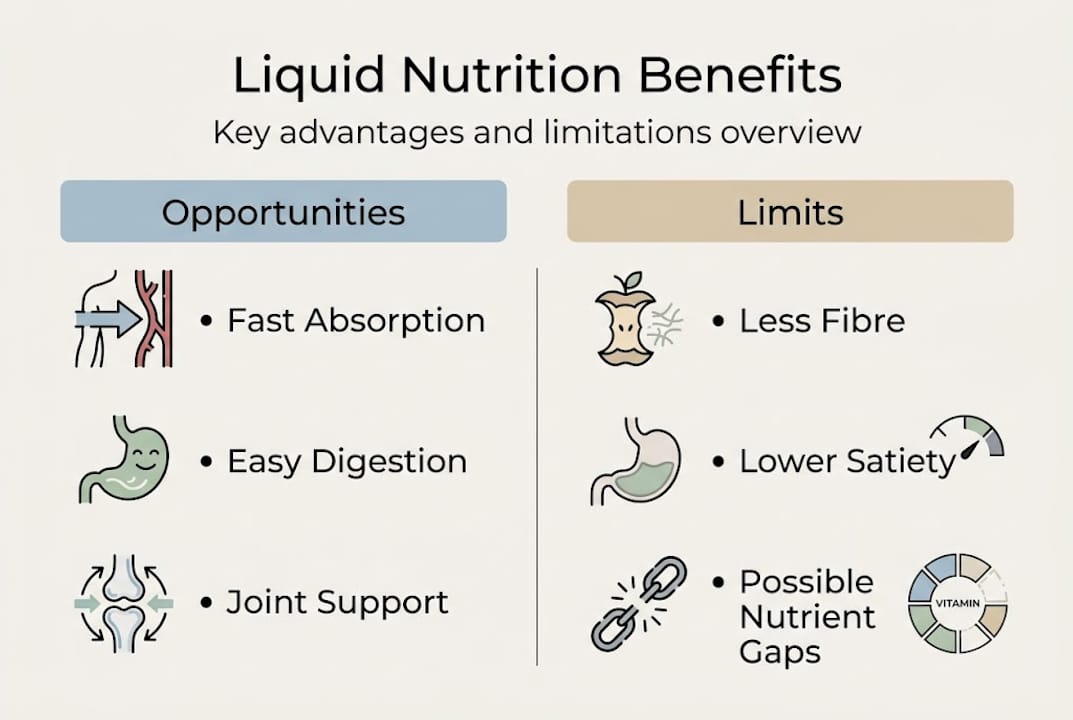
On the opportunity side, liquid nutrition is genuinely useful for people with swallowing difficulties, digestive conditions, or those who struggle to meet their nutritional needs through food alone. It also suits busy adults who need a fast, reliable source of protein or micronutrients between meals. Liquid meal replacements aid weight management, offer convenience, and can improve absorption of water-soluble nutrients.
The limitations are real, though. Risks of long-term exclusive use include nutrient gaps, reduced fibre intake, dizziness, and lower satiety. These are not minor inconveniences. Over time, replacing whole meals entirely with liquids can undermine the very wellness goals you are trying to achieve.
Who may benefit most:
- Athletes and active individuals supplementing protein and collagen around training
- People with joint discomfort looking for targeted collagen support
- Busy professionals needing a fast, nutritious option between meals
- Those with digestive sensitivities who absorb liquids more comfortably
- Individuals focused on skin health seeking consistent collagen intake
When to be cautious:
- Avoid exclusive liquid diets without medical supervision
- Do not use liquid nutrition as a long-term substitute for whole foods
- Seek professional guidance if pregnant, managing a health condition, or taking medication
You can explore more on this topic in our why choose liquid protein article, which covers practical scenarios and use cases in detail.
Combine liquid nutrition with regular meals and exercise for best results. It is not recommended as a lifelong sole diet without specialist supervision.
Choosing the right liquid nutrition: sources, quality, and best practices
After understanding the facts and the limits, how do you actually choose a high-quality liquid nutrition product that fits your needs? The market is crowded, and not all products deliver what they promise.
Start with the source. Low molecular weight peptides improve bioavailability, and marine and bovine collagen sources offer different advantages. Marine collagen tends to be more concentrated for skin-focused benefits due to its smaller peptide size, while bovine collagen is more general purpose, supporting skin, joints, and gut health. Our marine vs bovine collagen guide breaks this down in detail if you want to match your choice to your specific goal.
Read labels carefully. Avoid products with excessive added sugars, artificial flavourings, or vague ingredient lists. Transparent brands will tell you exactly what is in each serving, the source of their collagen, and how the product has been tested. Batch testing and third-party certification, such as Informed Sport, are strong indicators of quality.
Features of a quality liquid collagen supplement:
- Clear collagen source (marine or bovine, with origin stated)
- Low molecular weight peptides for superior absorption
- Vitamin C included or recommended alongside for collagen synthesis
- No unnecessary fillers or excessive added sugars
- Third-party tested for purity and label accuracy
- Transparent dosage information per serving
For further context on nutrition support formats, parenteral nutrition guidance from clinical bodies helps illustrate how seriously the medical world takes liquid delivery systems.
Pro Tip: Always consult a healthcare professional before replacing whole meals with liquid nutrition, particularly if you have allergies, are pregnant, or are managing a medical condition.
Our perspective: the most effective way to harness liquid nutrition
Here is what we have learned from working with athletes, fitness enthusiasts, and health-conscious individuals who use liquid collagen consistently: the results come from pairing it with the right habits, not from the supplement alone.
One of the most overlooked findings in the research is that combining moderate-intensity exercise with quality meal replacements yields superior muscle and body composition outcomes compared to supplementation or exercise alone. Liquid collagen is not a passive product. It works best when your body is actively rebuilding, which is exactly what happens after training.
We also see too many people fall into what we call the replacement trap: swapping whole meals entirely for liquid supplements and expecting the same nutritional breadth. It does not work that way. Liquid nutrition is a targeted tool. Use it to fill specific gaps, support recovery, or meet collagen intake targets. Keep whole foods at the centre of your diet.
Intermittent supplementation, rather than continuous daily use without breaks, also appears to support better long-term adherence and outcomes. Following a structured absorption workflow makes a measurable difference to how much benefit you actually get.
Pro Tip: Time your liquid collagen or protein supplement within 30 to 60 minutes after training, when your muscles and connective tissues are primed to absorb and utilise nutrients most effectively.
Take your wellness further with premium liquid collagen
If the evidence has you thinking seriously about liquid collagen, the next step is finding a product that actually delivers on its promises. Not all collagen supplements are equal, and quality really does matter when it comes to results.
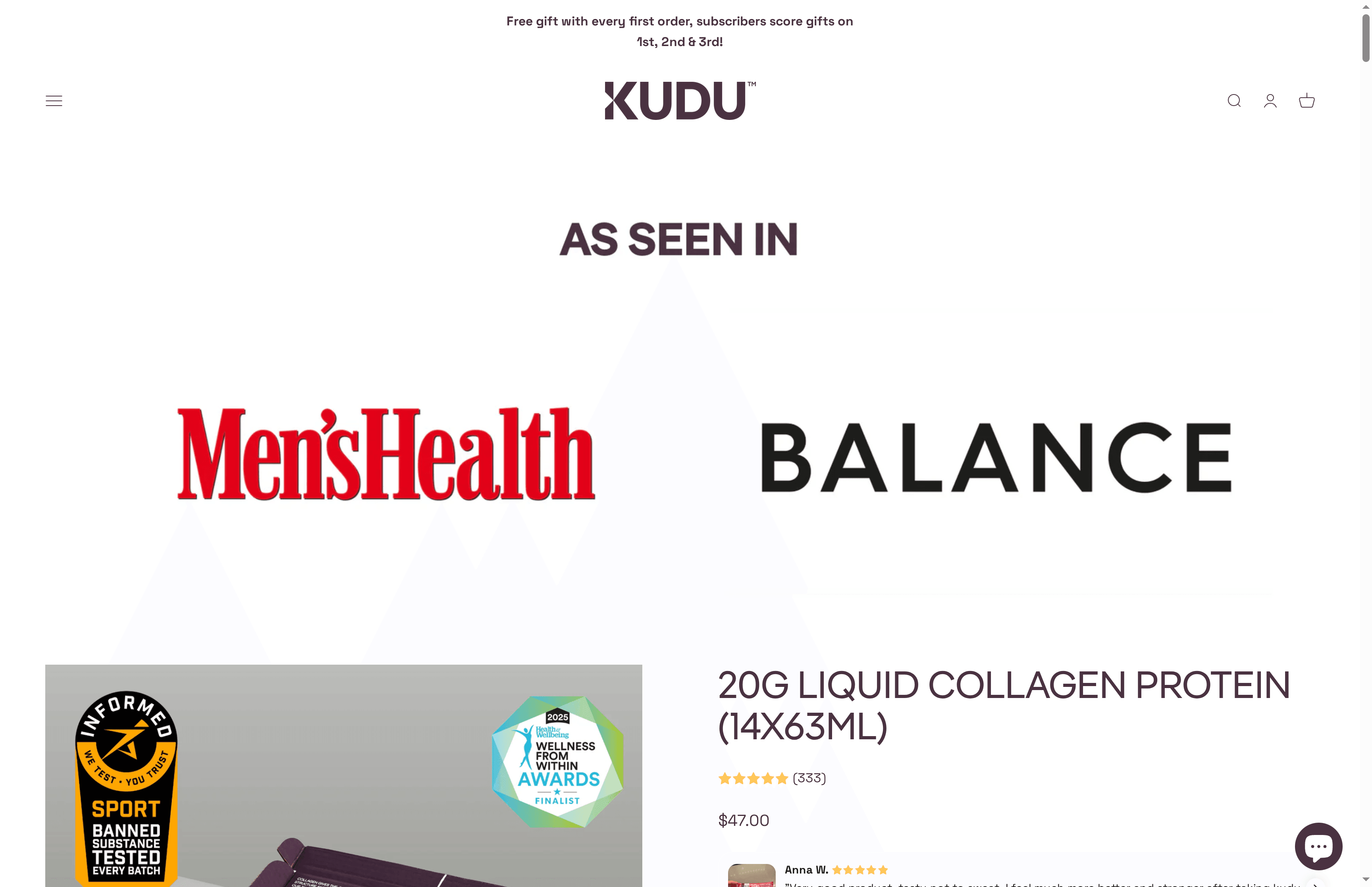
At KUDU Nutrition, our 20g collagen protein gels are designed for people who take their skin, joint, and fitness goals seriously. Each sachet delivers a clinically relevant dose of collagen protein in a convenient, great-tasting format, certified by Informed Sport for quality assurance. Whether you prefer to start with a 20g liquid collagen protein 14-pack or explore our full collagen and beauty collection, you will find options built around transparency, taste, and results.
Frequently asked questions
What is the difference between liquid nutrition and solid nutrition?
Liquid nutrition is absorbed faster and requires less digestive effort, but solid foods provide more fibre, greater satiety, and a broader range of nutrients from whole food sources.
Are liquid meal replacements safe for long-term use?
They are useful short term for specific needs, but risks of long-term exclusive use include nutrient gaps and reduced satiety, making them unsuitable as a permanent sole diet for healthy adults.
What are the main benefits of liquid collagen supplements?
Collagen peptides improve skin hydration, elasticity, and joint comfort, particularly when taken consistently alongside Vitamin C and combined with regular physical activity.
Who should avoid liquid-only diets?
People with allergies, those who are pregnant, or individuals managing specific health conditions should not begin a liquid-only diet without first seeking professional medical advice.
How do I choose a high-quality liquid collagen supplement?
Prioritise products with a clear collagen source, low molecular weight peptides for better absorption, third-party testing, and minimal unnecessary additives or added sugars.