

TL;DR:
- Protein is essential for bone structure, signaling, and preventing age-related loss.
- Higher protein intake, including collagen, improves bone density and strength safely.
- Personalized protein needs vary; exceeding the RDA benefits at-risk groups and active individuals.
Most people assume calcium is the cornerstone of bone health. It matters, certainly, but the picture is far more nuanced. Each extra gram of protein is associated with a measurable increase in bone mineral density, yet protein remains one of the most overlooked nutrients in bone care. Whether you’re an athlete pushing hard in training or someone focused on long-term health, understanding how protein works alongside calcium could fundamentally change your approach. This article covers how protein builds and maintains bone, how much you likely need, the specific contribution of collagen, and practical ways to put this knowledge to use.
Table of Contents
- Why protein matters for bone strength
- How protein intake influences bone density and strength
- Dispelling myths: is high protein intake harmful for bones?
- The role of collagen supplements in bone and joint health
- A closer look: why protein guidelines for bone health must be personal
- Support bone strength with quality collagen protein
- Frequently asked questions
Key Takeaways
| Point | Details |
|---|---|
| Protein is vital for bones | Protein makes up half the volume and a third the mass of your bones, essential for their strength. |
| Higher intake boosts bone health | Consuming more protein than the standard RDA can increase bone density, especially in older adults and athletes. |
| Collagen supplements support results | Collagen peptides, particularly with calcium and vitamin D, can further increase bone strength and joint health. |
| High protein is not a risk | Modern evidence shows no harm to bones from higher protein; it may even reduce fracture risk. |
| Personalisation is key | Protein needs vary, so adjust intake to fit your activity, age, and health goals for the best outcomes. |
Why protein matters for bone strength
Calcium gets most of the credit, but your bones are not simply mineral deposits. They are living tissue, continuously broken down and rebuilt in a process called bone remodelling. Protein is central to this process in ways many people don’t fully appreciate.
At the most basic level, protein provides amino acids, the raw materials your body uses to construct the bone matrix. This matrix is the scaffolding upon which minerals like calcium are deposited. Without a healthy protein-rich matrix, minerals have nowhere to anchor. As the research makes clear, protein constitutes ~50% of bone volume and roughly one third of total bone mass, making it structurally indispensable.
Beyond structure, protein drives the biological signals that support bone formation:
- Stimulates IGF-1: Dietary protein triggers the release of insulin-like growth factor 1 (IGF-1), a hormone that promotes bone formation and inhibits bone breakdown.
- Enhances calcium absorption: Protein improves intestinal absorption of calcium, meaning your calcium intake actually works harder when protein is adequate.
- Supports muscle that protects bone: Strong muscles place mechanical load on bones, which stimulates bone-building cells called osteoblasts.
- Fuels repair after stress: Endurance athletes and people recovering from injury need protein to rebuild not just muscle but bone microstructure too.
- Preserves bone during ageing: As we age, bone turnover accelerates and protein becomes increasingly critical to prevent net bone loss.
“Protein is not simply a muscle nutrient. It plays a structural, hormonal, and absorptive role in bone tissue that makes it as important as any mineral for long-term skeletal health.”
This is precisely why collagen matters specifically: collagen is the dominant protein in bone matrix, comprising the flexible framework that gives bone its tensile strength and resilience. Understanding this connection sets the stage for exploring what quantity of protein actually moves the needle for bone density, which is where the evidence becomes particularly instructive. You can also explore detailed bone health nutrition steps if you want to align your diet more precisely with your goals.
How protein intake influences bone density and strength
Knowing that protein is important is one thing. Knowing how much to consume for a measurable difference is another. The research here offers both reassurance and some important nuance.
A large-scale analysis confirmed that higher protein intake positively predicts BMD, though the magnitude of benefit varies meaningfully by age, sex, and health status. This isn’t a linear relationship where more always means better. There are threshold effects, and different groups respond differently.
One particularly striking finding: in older adults undergoing weight loss, higher protein raised hip bone strength by 3.8%. That’s a clinically meaningful difference that could reduce fracture risk during a period of life when bone loss is already accelerated.
| Group | Recommended protein intake | Bone-related outcome |
|---|---|---|
| General adults | 0.8 g/kg/day (RDA) | Baseline maintenance |
| Older adults (60+) | 1.2–1.5 g/kg/day | Reduced bone loss, improved BMD |
| Adults during weight loss | 1.5–2.0 g/kg/day | Preserved hip bone strength |
| Endurance athletes | ~1.8 g/kg/day | Supports bone remodelling under load |
| Strength athletes | 1.6–2.2 g/kg/day | Maintains BMD during high turnover |
To make this practical: a 70 kg recreational runner targeting 1.5 g/kg needs 105 g of protein per day. Most people consuming a standard Western diet fall somewhere between 70–90 g daily, so there is genuine room for improvement without extreme dietary changes.
Statistic to remember: Older adults who consumed higher protein during caloric restriction improved hip bone strength by 3.8% compared to those on standard protein intake.
Pro Tip: Rather than tracking grams obsessively, distribute protein across three to four meals. Research consistently shows that spreading intake rather than concentrating it in one meal optimises muscle and bone protein synthesis throughout the day.
For a detailed look at boosting bone strength through targeted approaches, or if you want to compare top supplements for bone health, there’s solid guidance available to complement your dietary adjustments.
Dispelling myths: is high protein intake harmful for bones?
The concern that high protein diets leach calcium from bones has been circulating for decades. It was based on the “acid load” hypothesis, which suggested that protein metabolism increases urinary calcium excretion, leading to net bone loss over time. It was a compelling theory, but the evidence never fully supported it.
In practice, early concerns about protein and bone loss have not been validated by more rigorous meta-analyses. These analyses consistently show that higher protein intakes are associated with equal or improved bone outcomes, and no increase in fracture risk. The initial hypothesis missed a key point: protein simultaneously enhances calcium absorption, which largely offsets any excretion effect.
“Meta-analyses and systematic reviews show that higher protein intake is associated with improved or neutral bone outcomes across age groups, with no credible evidence of increased fracture risk in healthy individuals.”
If you want to safely and effectively increase your protein intake for bone health, here is a practical approach:
- Start gradually. Increase daily protein by 10–15 g per week rather than jumping to a high target immediately. This gives your kidneys and digestive system time to adapt.
- Choose varied sources. Prioritise lean meats, eggs, dairy, legumes, and fish. Diversity improves the amino acid profile your bones receive.
- Pair with calcium-rich foods. Protein and calcium work synergistically. Including dairy or fortified plant milks alongside high-protein meals improves the combined effect.
- Stay hydrated. Higher protein intake increases metabolic load slightly; adequate water intake keeps everything functioning efficiently.
- Consider quality supplementation. Collagen peptides and high-quality protein supplements fill gaps efficiently, especially for those with elevated needs.
For athletes training intensively and older adults managing age-related bone loss, intakes up to 2.0 g/kg daily appear safe and beneficial. Kidney function should be monitored if pre-existing conditions are present, but for healthy individuals the safety margin is well established. If you’re optimising bone health with supplements, combining dietary changes with the right products accelerates results.
The role of collagen supplements in bone and joint health
Not all protein sources affect bone in the same way. Collagen peptides, derived from hydrolysed collagen protein, are increasingly recognised for their specific structural and functional benefits in skeletal and joint tissue.
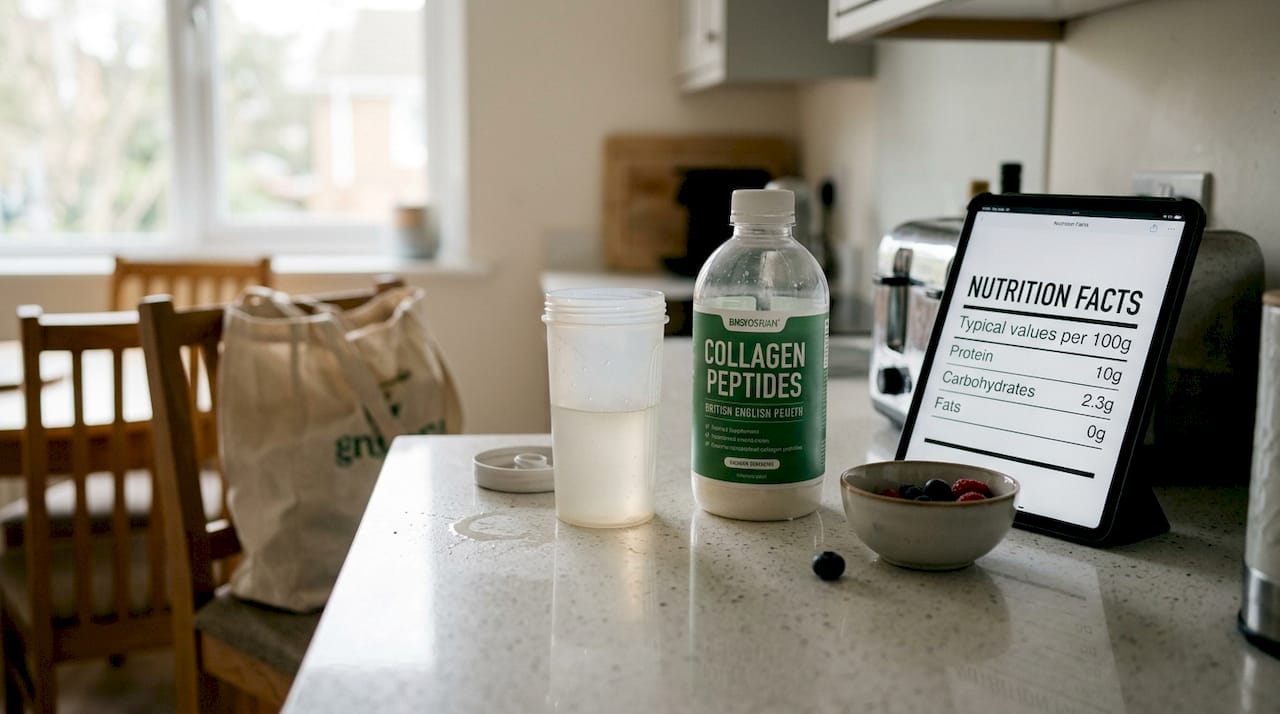
Collagen is the primary protein in bone matrix, tendons, cartilage, and ligaments. Supplementing with hydrolysed collagen peptides delivers specific amino acids, particularly glycine, proline, and hydroxyproline, that are preferentially used in connective tissue synthesis. Standard whey protein, by contrast, is excellent for muscle but lacks this targeted amino acid profile.
| Feature | Collagen peptides | Standard whey protein |
|---|---|---|
| Primary use | Bone, joint, and skin matrix | Muscle protein synthesis |
| Key amino acids | Glycine, proline, hydroxyproline | Leucine, isoleucine, valine |
| Absorption | Fast, targeted to connective tissue | Fast, primarily to muscle |
| Bone matrix support | Direct | Indirect |
| Joint cartilage support | Strong evidence | Limited evidence |
The clinical evidence is encouraging. Collagen peptide supplementation increases BMD at the femoral neck and lumbar spine, and improves muscle performance, particularly when combined with calcium and vitamin D. The combination appears to be more effective than any single component alone.
Who benefits most from collagen supplementation?
- Post-menopausal women: Bone density loss accelerates after menopause; collagen combined with calcium and vitamin D shows measurable protective effects.
- Athletes with joint stress: High training loads place significant demands on cartilage and connective tissue; collagen supports recovery and resilience.
- Older adults: Age-related decline in collagen synthesis makes supplementation increasingly relevant from around age 50 onwards.
Pro Tip: Timing matters. Taking collagen supplements 30–60 minutes before exercise or with a vitamin C-rich food enhances uptake into connective tissue. Vitamin C is a cofactor in collagen synthesis, making the combination particularly effective.
For deeper context, explore collagen protein supplement insights, the evidence on joint support supplement benefits, or collagen loading strategies to understand how to build an effective supplementation protocol.
A closer look: why protein guidelines for bone health must be personal
Population-level guidelines serve an important function. They give public health bodies a defensible benchmark. But they can obscure enormous variation in individual need, and that gap matters when your goal is genuinely optimising bone strength.
The standard RDA of 0.8 g/kg was designed to prevent deficiency, not to optimise bone density across a lifespan. A 55-year-old woman going through menopause, a 28-year-old marathon runner, and a 70-year-old man recovering from a hip fracture all have profoundly different requirements. Applying one number to all three is not guidance; it is a rough approximation.
What we see consistently in the evidence is that the groups who benefit most from higher protein, older adults, athletes, and individuals in caloric deficit, are precisely those whose needs diverge furthest from the standard recommendation. The relationship between protein and bone is also nonlinear, meaning there are diminishing returns at very high intakes, and possibly optimal ranges that differ by individual.
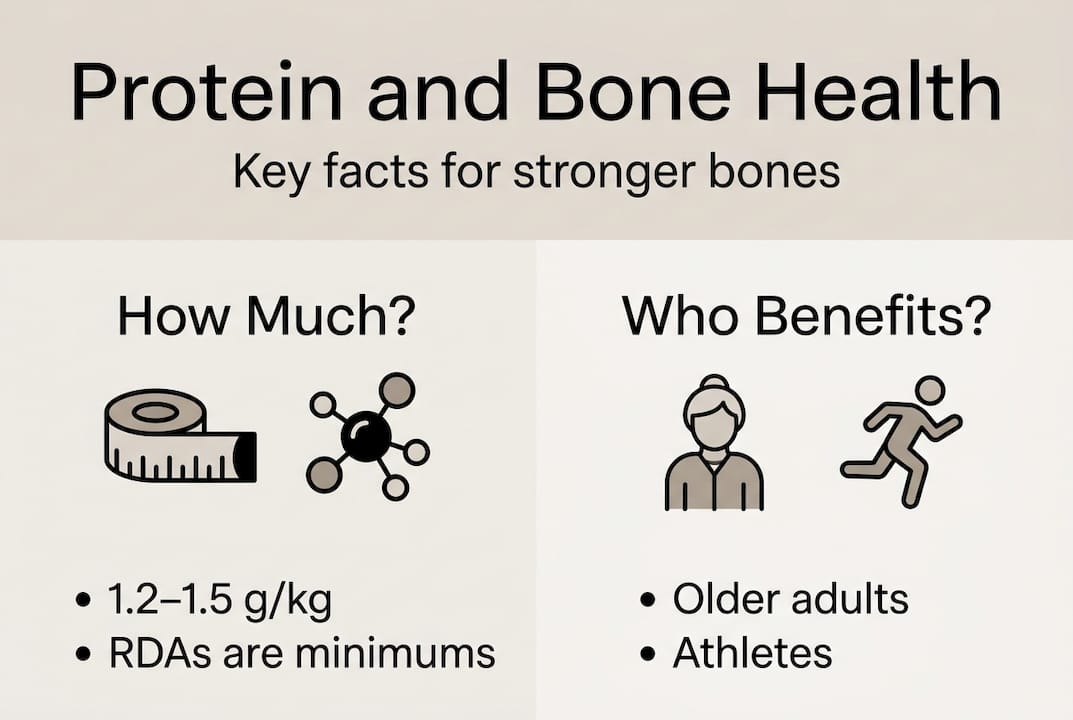
Our view is that you should treat the RDA as a floor, not a target. Experiment thoughtfully within safe margins, track how you feel and perform, and combine dietary protein with collagen-boosting lifestyle habits for the most integrated approach to bone and joint health.
Support bone strength with quality collagen protein
Putting the evidence into practice starts with choosing protein sources that actively support your skeletal health, not just your muscle goals.
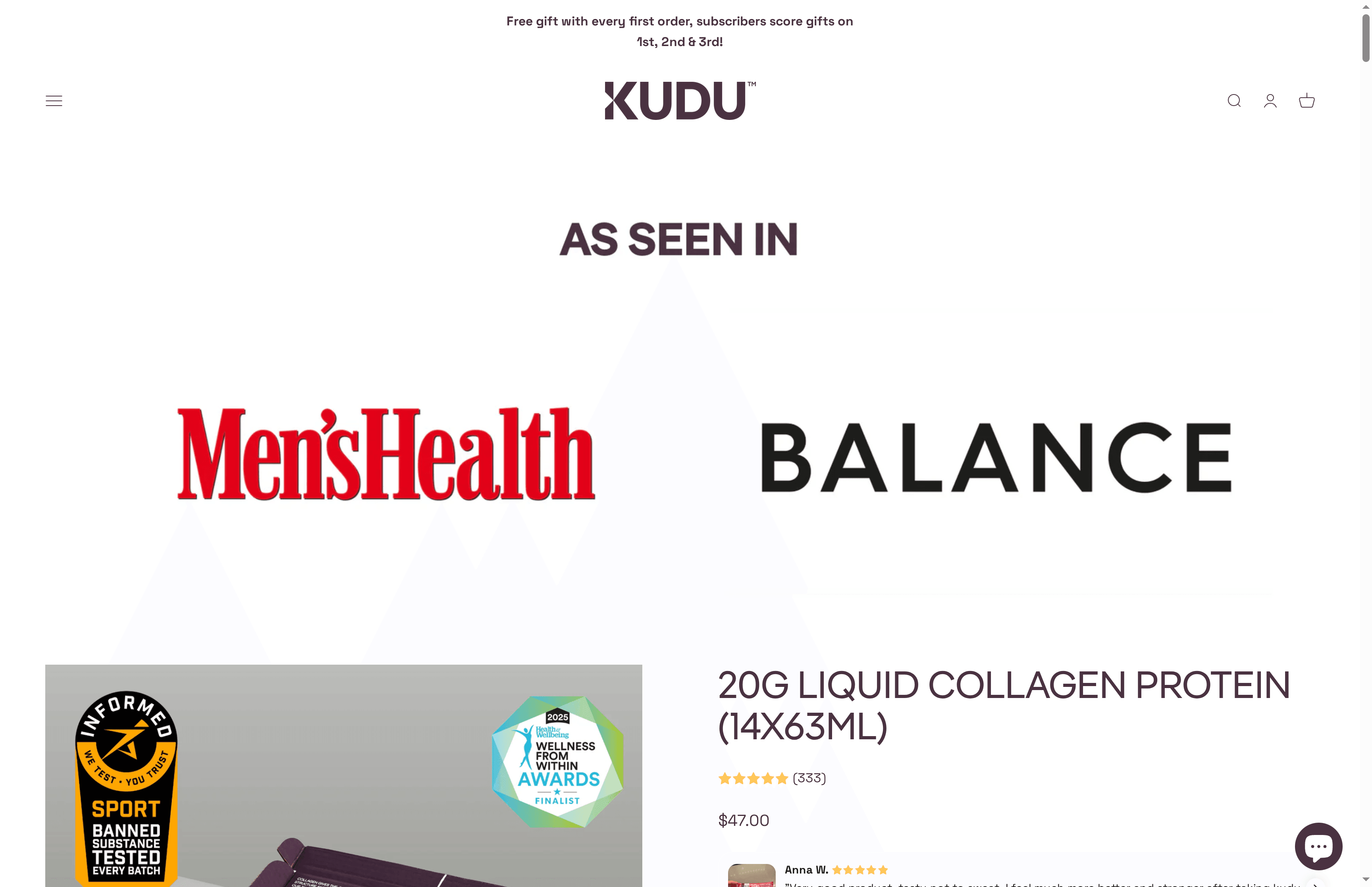
At KUDU Nutrition, our 20g collagen protein gels are formulated to deliver a clinically relevant dose of hydrolysed collagen peptides in a convenient, great-tasting sachet. Each serving provides 20 g of high-quality collagen protein to support bone matrix, joint resilience, and recovery, with full ingredient transparency and Informed Sport certification for athletes who need to be certain about what they’re consuming. Whether you’re managing bone health proactively or recovering from intensive training, the 20g collagen protein 14 pack gives you a structured, two-week foundation to start.
Frequently asked questions
How much protein should I eat for better bone strength?
Aim for 1.2–1.5 g/kg of body weight daily as a practical starting point. Older adults and athletes may need up to 2.0 g/kg, and endurance athletes specifically require around 1.8 g/kg per day.
Can taking too much protein weaken my bones?
No. Current evidence shows that higher protein does not harm bones or raise fracture risk. Meta-analyses confirm benefits at intakes well above the standard RDA for healthy individuals.
Are collagen supplements effective for bone strength?
Yes, particularly when paired with calcium and vitamin D. Collagen peptides increase BMD at the femoral neck and spine while also supporting muscle performance and joint health.
What are easy ways to add more protein for bone health?
Prioritise lean meats, eggs, dairy, and fish across your main meals. A high-quality collagen protein supplement is one of the most efficient and targeted additions you can make, especially if your training load is high.
Does exercise impact protein’s effect on bones?
Exercise is the primary driver of bone loading and remodelling. Protein-exercise combination studies show no additional bone mineral content benefit versus exercise alone, but protein remains essential for preserving bone density during caloric restriction and recovery.