


TL;DR:
- Supplement purity measures the percentage of active ingredients free from contaminants, but many products lack verified batch testing. Consumers should request batch-specific Certificates of Analysis, as marketing claims like “pharmaceutical grade” are unregulated and unreliable. High-quality supplements are transparent, verified by third-party testing, and produced under GMP standards with full ingredient disclosure.
Supplement purity is defined as the percentage of a product that consists of the stated active ingredient, free from contaminants, fillers, and undeclared substances. Understanding supplement purity levels matters because a product that tests at 70% purity delivers far less of the active compound than its label suggests, and may carry residual heavy metals, pesticides, or microbial contamination. The UK Food Standards Agency (FSA) regulates supplements as foods under The Food Supplements (England) Regulations 2003, but manufacturers face no requirement to test purity or potency before a product reaches the shelf. That gap between regulation and reality makes consumer knowledge the most reliable line of defence. Third-party testing, Certificates of Analysis (CoA), and Good Manufacturing Practice (GMP) certification are the three tools that separate trustworthy products from those that merely look the part.
How are supplement purity levels determined and tested?

Purity testing screens a supplement for adulterants, contaminants, and fillers not listed on the label, and confirms the identity, strength, and consistency of the active ingredient. Testing on finished product batches is the only reliable way to verify what a consumer actually receives. Raw material testing, which many brands cite, only confirms the purity of an ingredient before it is blended, compressed, or encapsulated with other substances.
What a Certificate of Analysis actually covers
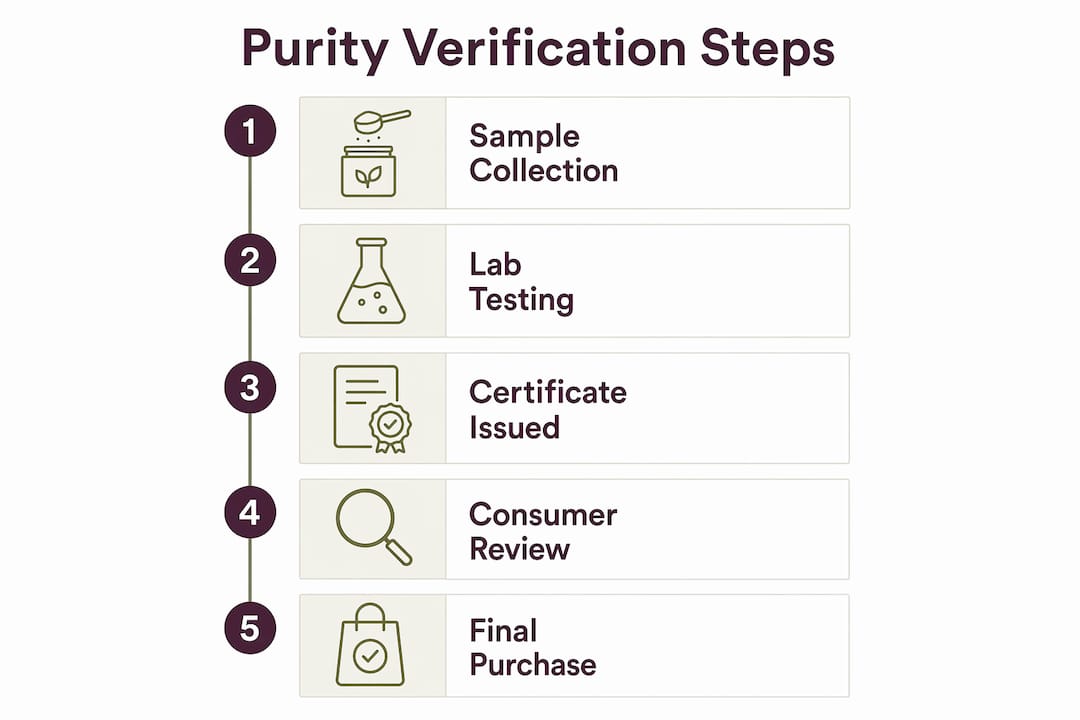
A CoA is the primary document used to verify supplement quality. A credible CoA details the batch number, test date, laboratory name, identity verification, potency confirmation, and screening for heavy metals and microbial contamination. Reputable brands publish CoAs on their website or provide them on request. If a brand cannot produce a current CoA for the specific batch you are buying, that is a meaningful warning sign.
GMP certification versus third-party product testing
GMP certification confirms that a manufacturing facility follows consistent hygiene and process standards. It does not confirm that every batch of a finished product has been tested for purity. GMP and third-party testing together provide a fuller quality assurance picture than either standard alone. A facility can hold GMP certification and still produce batches that vary in potency or carry trace contaminants if batch-level testing is absent.
Key purity tests used by reputable laboratories include:
- Heavy metal screening (lead, mercury, arsenic, cadmium)
- Microbial testing (total plate count, yeast, mould, E. coli, Salmonella)
- Pesticide residue analysis
- Identity verification (confirms the ingredient is what the label states)
- Potency testing (confirms the stated dose is present)
- Filler and adulterant screening (detects undeclared substances)
Pro Tip: Ask any supplement brand for the CoA specific to your batch number, not a generic document. The batch number appears on the product packaging. If the CoA predates the batch, it does not verify what is in the product you hold.
What do ‘pharmaceutical grade’, ‘clean label’, and ‘natural’ actually mean?
“Pharmaceutical grade” has no official legal definition for dietary supplements in the UK. The term is a marketing claim without regulatory backing, and no enforcement body verifies it for supplement products. Brands use it freely because no legislation prevents them from doing so.
“Clean label” and “natural” carry the same problem. Both are unregulated marketing terms in the UK supplement market. A product labelled “natural” may still contain synthetic binders, artificial flow agents, or poorly absorbed ingredient forms. The word signals a marketing position, not a purity standard.
What to look for instead of marketing language
Specific, verifiable details on a label carry far more weight than broad claims. Consumers who understand supplement label transparency can filter out vague language and focus on what the data actually shows.
Watch for these signals of genuine quality:
- Ingredient form specificity: magnesium citrate absorbs significantly better than magnesium oxide, which is cheaper and less bioavailable. A label that names the form is more transparent than one that simply states “magnesium.”
- Full ingredient list: every substance in the product, including fillers, binders, and flow agents, should appear on the label.
- Batch number and best-before date: these allow traceability and link the product to a specific CoA.
- Manufacturing facility information: a named facility with a verifiable address is a positive indicator.
- Absence of proprietary blends: blends hide individual ingredient doses, making purity assessment impossible.
Consumers should also treat “clinically proven” with scepticism. Many studies cited on supplement labels are manufacturer-funded and do not verify the purity or efficacy of the retail product.
How can consumers assess supplement purity before buying?
Price correlates with purity in the supplement market because high-bioavailability ingredients cost more than cheap bulk materials. A suspiciously low price is a reliable signal that corners have been cut somewhere in sourcing or manufacturing. This does not mean the most expensive product is always the best, but it does mean that very cheap supplements warrant extra scrutiny.
A practical approach to assessing supplement quality follows a clear sequence:
- Check for a batch-specific CoA. Request or download the CoA that matches the batch number on your product. Confirm it includes heavy metal and microbial results, not just potency data.
- Read the full ingredient list. Identify every filler, binder, and additive. Look up any unfamiliar substance to confirm it is inert and safe.
- Verify the ingredient form. Confirm the compound used is a well-absorbed form, not a cheap alternative included to reduce manufacturing costs.
- Check the manufacturing facility. A named, verifiable facility with GMP certification is a positive indicator. No facility information is a red flag.
- Be cautious with online marketplaces. Supplements sold by unknown third-party sellers on large platforms carry a higher risk of being counterfeit or stored incorrectly. Buying from unknown sellers with very low prices often indicates low-quality or counterfeit manufacturing.
- Use simple physical checks where appropriate. For capsule supplements, weight consistency across capsules in a batch can indicate filler usage. NMN supplements labelled as 99% pure, for example, often carry that purity claim for the raw powder only. Third-party tests on raw powder do not reflect the purity of the finished capsule after fillers are added during manufacturing.
Pro Tip: Dissolve a capsule in water and observe the residue. A high-filler product leaves a cloudy, starchy residue. A high-purity product dissolves more cleanly. This is not a laboratory test, but it is a useful first-pass indicator.
Labels legally must include Nutrient Reference Values (NRVs) showing the percentage of daily nutrition provided by each ingredient. A high NRV figure does not confirm purity. Labels may hide proprietary blends or use interchangeable units that obscure the true dose, making independent verification all the more important.
What UK regulations govern supplement purity and safety?
UK food supplements are regulated as food under The Food Supplements (England) Regulations 2003. Manufacturers bear legal responsibility for safety, but no pre-market approval of purity or potency is required before a product goes on sale. The FSA intervenes only after a safety or labelling complaint is raised.
Post-market surveillance relies on Trading Standards enforcement, which faces significant budget constraints. Compliance is largely voluntary in the UK supplement market, which means systematic regulatory testing of products is limited. The practical result is that supplement purity depends heavily on manufacturer transparency and consumer awareness.
The current regulatory framework in summary:
| Area | Current position |
|---|---|
| Pre-market purity approval | Not required for food supplements |
| Manufacturer responsibility | Must ensure safety; no mandatory purity testing |
| Post-market enforcement | FSA and Trading Standards; reactive, not proactive |
| Health claims | Controlled by MHRA and the NHC register |
| GMP certification | Voluntary; verifies process, not batch purity |
| Third-party testing | Voluntary; most meaningful when batch-specific |
Health claims on supplement labels are controlled by the Medicines and Healthcare products Regulatory Agency (MHRA) and the Nutrition and Health Claims (NHC) register. A product carrying an authorised health claim has met a specific evidence threshold for that claim, but authorisation of a claim does not verify the purity of the product carrying it. These are separate assessments.
Understanding supplement compliance requirements helps consumers interpret what regulatory marks and certifications actually cover, and where the gaps remain.
Key takeaways
Supplement purity levels are only meaningful when verified by batch-specific, third-party testing of the finished product, not the raw ingredient.
| Point | Details |
|---|---|
| Purity is defined by active ingredient percentage | A pure supplement contains the stated ingredient without contaminants, fillers, or adulterants. |
| CoAs must be batch-specific | A Certificate of Analysis is only valid for the exact batch it references; generic documents do not verify your product. |
| Marketing terms carry no legal weight | “Pharmaceutical grade,” “clean label,” and “natural” are unregulated claims in the UK supplement market. |
| GMP alone is not enough | GMP certifies manufacturing processes, not individual batch purity; third-party testing fills that gap. |
| Price and transparency are reliable signals | High-bioavailability ingredients cost more; opaque labels and very low prices often indicate quality compromises. |
The gap nobody talks about
The part of this market that frustrates me most is the raw material loophole. A brand tests its raw NMN powder, gets a 99% purity result, prints that figure on the packaging, and technically has not lied. But by the time that powder has been blended with magnesium stearate, microcrystalline cellulose, and a silica flow agent, then compressed into a capsule, the purity of the finished product is a different number entirely. Nobody tests the capsule. Nobody publishes that CoA.
I have spent time reviewing supplement labels across the UK market, and the pattern repeats across categories. The brands that publish batch-specific CoAs for finished products are a small minority. Most rely on raw material certificates, GMP badges, and vague “quality assured” language to satisfy consumer questions. That is not dishonesty in the legal sense. It is a gap in the framework that informed buyers need to understand.
My honest advice: treat any purity claim that does not come with a finished-product CoA as unverified. Ask for it. If the brand cannot provide it, that tells you something important. The brands that invest in genuine batch testing are usually proud to show the results. Transparency is not difficult when the results are good.
— Sam
Kudunutrition’s approach to supplement quality
Kudunutrition builds quality assurance into every stage of production, from ingredient sourcing through to finished-product testing. Each batch of liquid collagen protein is produced with full ingredient transparency, clear labelling, and Informed Sport certification, which requires rigorous testing for banned substances and contaminants. That certification is not a marketing badge. It is a batch-level commitment backed by an independent laboratory.
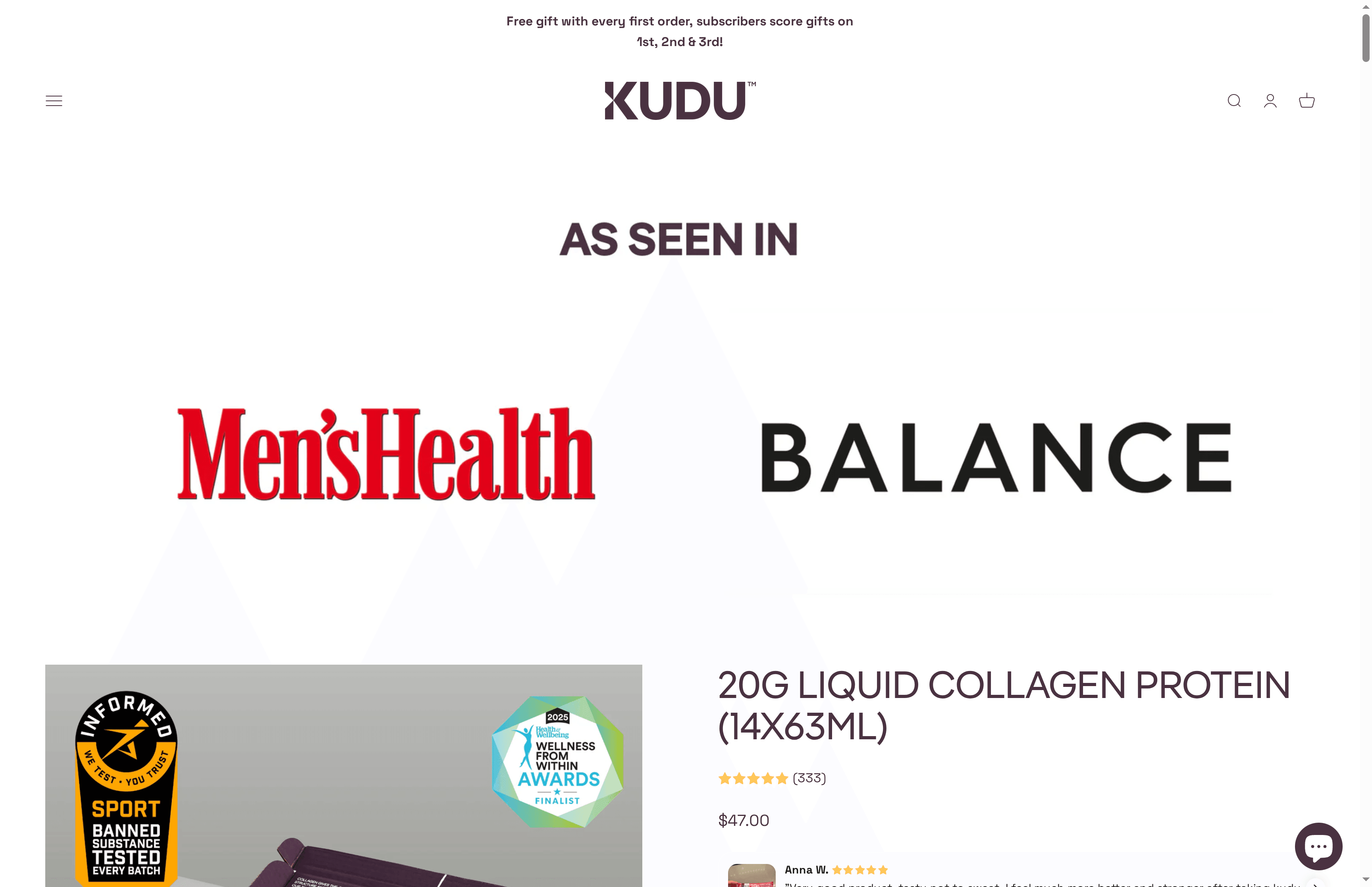
For consumers who want a supplement with a clear purity record and nothing hidden in the ingredient list, Kudunutrition’s 20g collagen protein range is a straightforward starting point. Every sachet delivers a verified dose of collagen protein with no proprietary blends and no ambiguity about what you are consuming.
FAQ
What does supplement purity level mean?
Supplement purity level refers to the percentage of a product that consists of the stated active ingredient, free from contaminants, fillers, and undeclared substances. A higher purity level means more of the product is the ingredient you intend to consume.
Is ‘pharmaceutical grade’ a regulated term for UK supplements?
No. “Pharmaceutical grade” has no official legal definition for dietary supplements in the UK and is not verified by any regulatory body. It is a marketing term that carries no guaranteed purity standard.
How do I verify the purity of a supplement I have already bought?
Request the Certificate of Analysis for your specific batch number from the manufacturer. Confirm it covers the finished product, not just the raw ingredient, and that it includes heavy metal, microbial, and potency results.
Does GMP certification guarantee supplement purity?
GMP certification verifies that a manufacturing facility follows consistent process and hygiene standards. It does not confirm that every finished batch has been tested for purity or potency. Batch-specific third-party testing is needed alongside GMP to verify the actual product.
Why do UK supplement regulations not prevent low-purity products from being sold?
The Food Supplements (England) Regulations 2003 classify supplements as food, requiring no pre-market purity approval. Enforcement is reactive, relying on complaints to trigger action. Budget constraints on Trading Standards further limit systematic market testing, making voluntary manufacturer transparency the primary quality safeguard.