

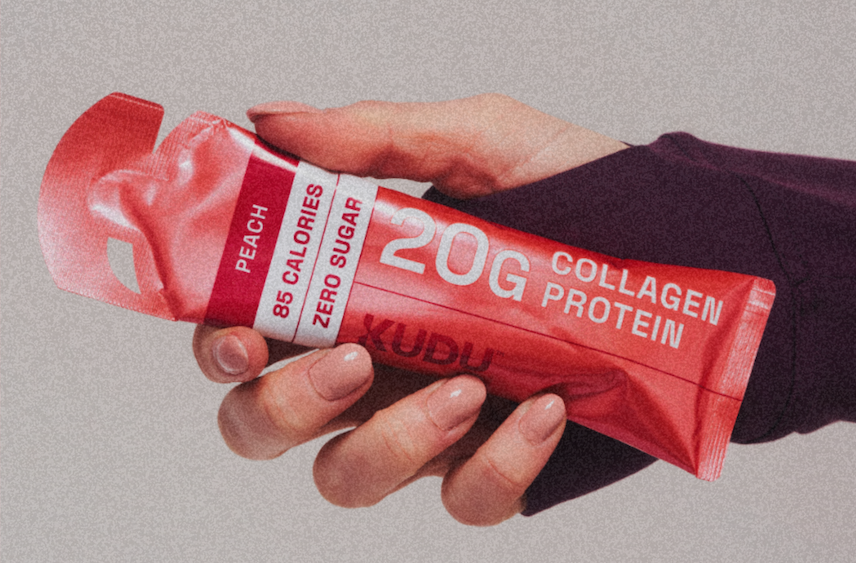
How much collagen per day? Research supports 10–40g daily, and 20g a day is the sweet spot for most people — enough to cover skin, hair, joints, bones and muscle recovery in a single dose. And no, 20g is not too much: it sits comfortably in the studied range and collagen has no known toxic limit. Here’s exactly how to work out your ideal daily dose.
If you’re taking collagen, or thinking about starting, you might be wondering: how much do I actually need? Should I be taking 8 grams, 20 grams, or more? And can I take too much?
Let’s break it down...
What’s the Right Daily Dose?
There’s no one-size-fits-all answer, but research suggests the optimal collagen intake depends on your goals:
- For general health & maintenance: 10-40g per day
- For skin, hair & nails: 2.5-20g per day (Collagen makes up 70% of skin’s structure, so higher doses enhance hydration, elasticity & wrinkle reduction.)
- For muscle recovery & strength: 15-40g per day (Collagen provides amino acids like glycine & proline, which support muscle repair and reduce post-workout soreness.)
- For joint & bone health: 5-40g per day (Collagen helps maintain cartilage, improves joint function & may slow down osteoarthritis progression.)
- For weight management & satiety: 20-40g per day (Protein supports appetite control, and collagen has been shown to promote fullness while stabilising blood sugar levels, reducing cravings.)
KUDU’s 20g collagen gel sachets hit the science-backed sweet spot, delivering an optimal dose that supports multiple benefits - from skin and joint health to metabolism and muscle recovery.

How Many mg of Collagen Per Day?
Collagen doses are sometimes listed in milligrams, which makes numbers look bigger than they are: 1,000mg is just 1g. So a “10,000mg collagen” supplement delivers 10g, and 20,000mg is 20g — the dose in one KUDU sachet. Most clinical research uses between 2,500mg (2.5g) and 20,000mg (20g) per day, so if a product only provides a few hundred milligrams, it is well below the doses shown to work in studies.
How a KUDU shot compares to other collagen formats
Most collagen products give you a fraction of the dose the studies used, and make you mix it yourself. Here is how the common UK formats stack up on the numbers that matter.
| KUDU liquid shot | Collagen powder | Beauty collagen shots | Tablets / capsules | |
|---|---|---|---|---|
| Collagen per serving | 20,000mg | 5,000–10,000mg per scoop | typically 5,000–10,000mg | 500–1,000mg per tablet |
| Preparation | Ready to drink, two sips | Scoop, mix, shake | Ready to drink | 10–20 pills for a 10g dose |
| Sugar | 0g | Varies (often flavoured) | Often 2–5g | 0g |
| Calories | 85 kcal | ~40 kcal per 10g | 30–60 kcal | Negligible |
| Batch-tested for sport | Informed Sport certified | Some brands | Rarely | Rarely |
| Cost per 1,000mg collagen | 12.5p (one-time price) | UK average ~34p across formats | Usually the most expensive per mg | High per mg |
Powder, beauty-shot and tablet columns describe typical mainstream UK products; ranges are indicative. KUDU figures are per 63g sachet. The 34p UK average is KUDU's own comparison of 15 UK brands' listed one-time prices, shown on the 14-pack product page.
Updated September 2026 with the doses used in the key trials.
What dose did the collagen studies actually use?
Most confusion about collagen dosage comes from mixing up three different things: the dose that moved a skin measurement, the dose that helped a sore knee, and the dose that changed muscle or body composition. They are not the same number. Here is what the trials that get cited most often actually gave people, and for how long.
| Goal | Daily dose used | Duration | Study |
|---|---|---|---|
| Skin elasticity and hydration | 2.5g–5g | 8 weeks | Proksch et al., 2014 |
| Nail growth and brittleness | 2.5g | 24 weeks | Hexsel et al., 2017 |
| Knee discomfort in active adults | 5g | 12 weeks | Zdzieblik et al., 2017 |
| Ankle stability after sprains | 5g | 6 months | Dressler et al., 2018 |
| Achilles tendon pain (with calf training) | 2.5g | 6 months | Praet et al., 2019 |
| Bone density, postmenopausal women | 5g | 12 months | König et al., 2018 |
| Joint pain in athletes | 10g | 24 weeks | Clark et al., 2008 |
| Collagen synthesis before training | 15g (gelatin + vitamin C) | 1 hour pre-exercise | Shaw et al., 2017 |
| Muscle strength and body composition (with resistance training) | 15g | 12 weeks | Zdzieblik 2015; Kirmse 2019; Jendricke 2019 |
| Muscle soreness and recovery after hard exercise | 20g | 9 days | Clifford et al., 2019 |
Two things stand out. First, the beauty outcomes needed the least collagen (2.5g to 5g). Second, every outcome that involves load-bearing tissue or muscle used 10g to 20g. If you train, or you are over 40 and want joints, tendons and muscle covered as well as skin, the top of the range is the sensible target. One KUDU sachet delivers 20g, which covers every row of the table in one go.
How much collagen per day for skin?
2.5g to 5g a day for at least 8 weeks is the evidence-based minimum. More is not wasted: the extra collagen simply counts towards your daily protein, and taking a larger dose means you never fall below the studied threshold on a day you forget or skip.
How much collagen per day for joints and tendons?
5g to 10g a day, taken consistently for 3 to 6 months, and ideally 30 to 60 minutes before you load the joint. The Achilles and ankle trials paired the collagen with specific exercise, which matters more than the exact gram count. See our guide to collagen for tendon pain.
How much collagen per day for athletes and muscle?
15g to 20g. The strength and body-composition trials all used 15g alongside resistance training, and the soreness trial used 20g. This is where a single 20g shot makes life simple. Full breakdown in collagen dosage for athletes.
How Much Collagen Per Day for Each Goal?
The research-backed daily dose depends on what you want collagen to do:
| Goal | Daily dose used in studies |
|---|---|
| Skin, hair & nails | 2.5–10g |
| Joints & cartilage | 5–15g |
| Muscle, recovery & healthy ageing | 15–20g+ |
A single 20g dose covers every tier at once, which is why KUDU uses one 20g liquid collagen sachet per day rather than asking you to juggle scoops. For women over 40 — when natural collagen production has already fallen sharply — the higher end of the range also contributes meaningfully to daily protein intake.
Can You Take Too Much Collagen?
Collagen is a protein, and like any protein, your body has a limit to how much it can effectively use at once. Most studies suggest that 10-40g per day is optimal, and there’s no known toxic limit - your ideal intake will depend on factors like your individual needs, body composition (height, weight, muscle mass), and activity levels.
HOW DOES COLLAGEN FIT INTO YOUR OVERALL PROTEIN INTAKE?
Research suggests that up to 36% of your total daily protein intake can come from collagen peptides without compromising dietary protein quality - meaning you’re still getting enough essential amino acids from other protein sources.
To put that into perspective:
- If your daily protein requirement is 140g, up to 50g can come from collagen.
- If your requirement is 220g per day, you could get 70g from collagen while still maintaining a balanced intake of complete and incomplete proteins.
How Many Collagen Sachets Can You Take Per Day?
KUDU’s 20g collagen gel sachets make it easy to get an effective daily dose - but if you’re looking for an extra boost or faster results, we recommend 1-3 sachets per day:
- 1-2 sachet per day → Ideal for general health, skin, muscle recovery, and joint support.
- 3 sachets per day → A higher intake for very active individuals, injury recovery, or those targeting faster results.
It’s important to combine your collagen supplementation with a balanced diet! While collagen is beneficial, it shouldn’t be your only protein source. Be sure to include complete protein sources like meat, fish, eggs, or plant-based proteins to support muscle growth, recovery, and overall health.
Collagen Dosage FAQs
How much collagen should I take per day?
Research supports 10–40g of collagen per day depending on your goal: 2.5–20g for skin, hair and nails; 15–40g for muscle recovery; 5–40g for joints and bones. A single 20g dose covers all of these at once.
Is 20g of collagen a day too much?
No. 20g sits in the middle of the 10–40g range used in research, and collagen has no known toxic limit. That is why KUDU delivers exactly 20g per sachet — an effective dose for skin, joints and recovery in two sips.
How many grams of collagen per day for skin?
Studies show benefits from 2.5g upwards, but doses towards 10–20g per day are linked with greater improvements in skin hydration, elasticity and wrinkle reduction.
Can you take too much collagen?
There is no known toxic limit for collagen. Your body simply uses the amino acids as protein. As a guide, keep collagen to no more than around a third of your total daily protein so you still get complete proteins from other sources.
Should I take collagen every day?
Yes — consistency is what drives results. Most studies showing benefits for skin, joints and recovery used daily doses over 8–12 weeks, so pick a routine you can stick to.