


You’ve been taking collagen religiously, yet your skin still lacks that promised glow and your joints ache after workouts. The frustrating truth is that absorption matters more than dosage. Most people waste money on supplements that never reach their tissues effectively. This guide reveals practical, science-backed strategies to maximise collagen uptake, delivering visible improvements in skin hydration, elasticity, and joint mobility within weeks.
Table of Contents
- Understanding Collagen Absorption: How Your Body Processes Supplements
- How To Prepare Your Body For Optimal Collagen Absorption
- Pairing Collagen With Nutrients For Improved Absorption And Benefits
- Best Practices For Collagen Supplementation And Monitoring Results
- Enhance Your Collagen Journey With KUDU Nutrition Supplements
- Frequently Asked Questions
Key takeaways
| Point | Details | |-------|---------|| | Hydrolysed collagen absorbs better | Peptides broken into smaller molecules cross intestinal walls more efficiently than intact collagen. | | Empty stomach timing matters | Taking collagen before meals with vitamin C significantly boosts bioavailability of amino acids. | | Low molecular weight reduces pain | Specific peptide sizes demonstrate clinically proven joint pain reduction and improved physical function. | | Visible results need consistency | Skin and joint improvements typically emerge after 8 to 16 weeks of daily supplementation. | | Multiple factors influence uptake | Age, gut health, supplement form, and nutrient pairing all affect how much collagen your body utilises. |
Understanding collagen absorption: how your body processes supplements
Your digestive system doesn’t absorb collagen as one giant protein molecule. Instead, oral collagen hydrolysates are fragmented and absorbed via PepT1 transporter mechanisms in your intestinal lining. This process breaks down collagen into amino acids and small peptides, particularly di-peptides and tri-peptides like proline-hydroxyproline, which your intestines recognise and transport into your bloodstream.
The molecular weight of your collagen supplement dramatically influences how much reaches your tissues. Hydrolysed collagen peptides, already broken into smaller fragments during manufacturing, bypass much of the digestive work your body would otherwise perform. This pre-digestion explains why hydrolysed forms consistently outperform intact collagen in absorption studies.
Your gut’s condition plays a crucial role in this process. Processing conditions, molecular weight, gut microbiome, and mucosal health impact collagen uptake significantly. A healthy intestinal lining with robust enzyme secretion efficiently processes peptides, whilst inflammation or damage reduces absorption capacity. Age compounds this challenge, as digestive enzyme production and intestinal surface area naturally decline over time.
Several factors determine absorption efficiency:
- Peptide size and molecular weight
- Intestinal transporter availability and function
- Gut microbiome diversity and balance
- Mucosal barrier integrity and inflammation levels
- Digestive enzyme secretion capacity
Pro tip: Supporting your gut health with collagen creates a positive feedback loop, as collagen peptides themselves may help repair intestinal lining whilst being better absorbed through a healthier gut.
How to prepare your body for optimal collagen absorption
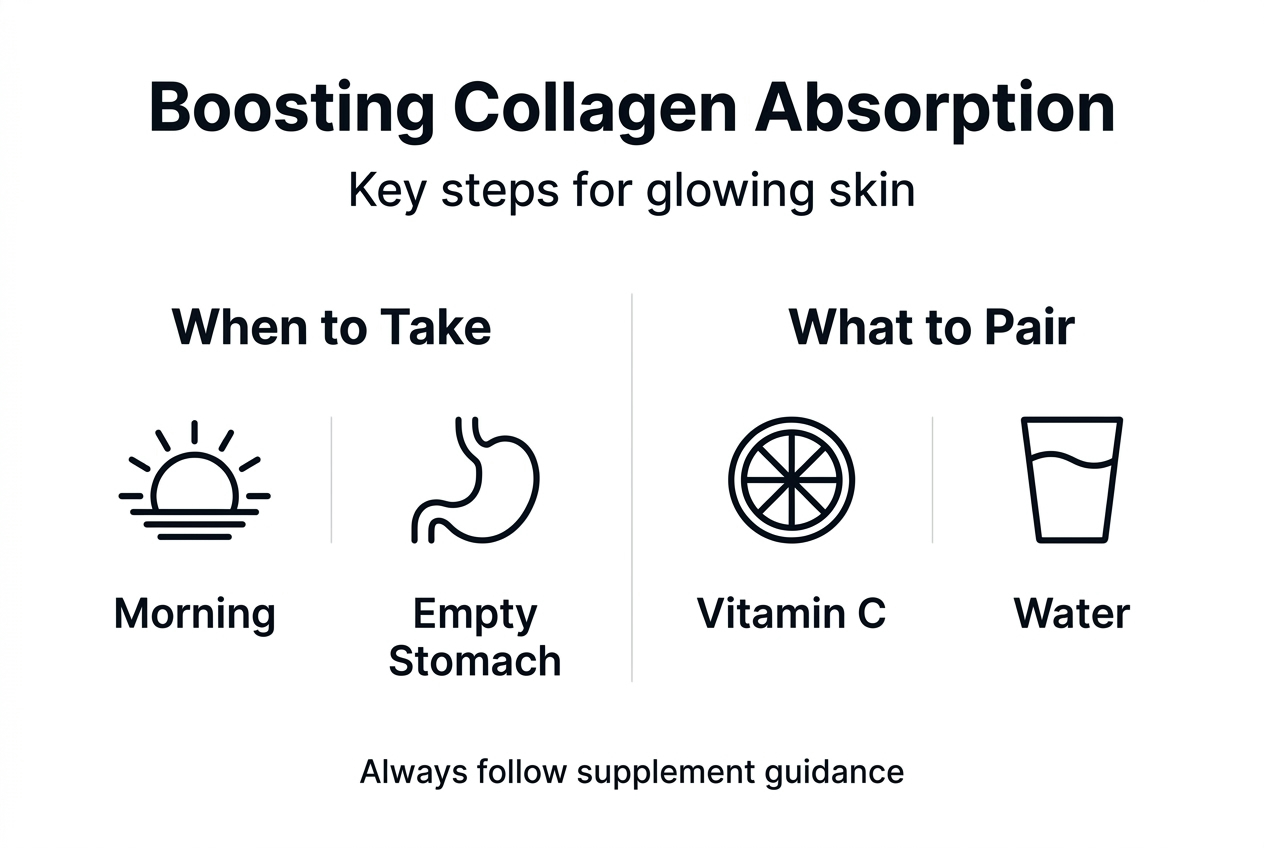
Timing your collagen intake strategically maximises how much your body absorbs. Taking collagen on an empty stomach increases bioavailability of key amino acids, allowing peptides to encounter minimal interference from other nutrients competing for absorption pathways. First thing in the morning, before your breakfast, represents the ideal window for most people.

Calcium deserves special attention in your supplementation routine. This mineral can inhibit protein absorption when consumed simultaneously, so separate your collagen and calcium-rich foods or supplements by at least one to two hours. If you take calcium supplements or consume dairy products regularly, plan your collagen intake accordingly to avoid this interference.
Age and enzyme secretion affect collagen digestion substantially. As you age, your body produces fewer digestive enzymes and experiences reduced intestinal surface area, both of which compromise nutrient absorption. Whilst you cannot reverse these changes, maintaining excellent gut health through diverse fibre intake, probiotics, and anti-inflammatory foods supports optimal collagen utilisation.
| Time of Day | Absorption Conditions | Recommended Action |
|---|---|---|
| Morning (empty stomach) | Highest bioavailability | Take collagen 30 minutes before breakfast |
| Mid-morning | Good if fasted | Suitable between breakfast and lunch |
| With meals | Reduced absorption | Avoid taking during or immediately after eating |
| Before bed | Moderate absorption | Alternative timing if morning doesn’t suit |
| With calcium | Significantly reduced | Separate by 1 to 2 hours minimum |
Pro tip: Create a simple morning ritual by keeping your collagen supplement near your kettle or coffee maker. This visual cue helps establish the consistent routine essential for long-term results.
Pairing collagen with nutrients for improved absorption and benefits
Vitamin C stands as collagen’s most important nutritional partner. This essential vitamin doesn’t just support absorption, it actively participates in collagen synthesis within your cells. Vitamin C co-supplementation stabilises collagen peptides and enhances fibroblast response, meaning your skin cells can better utilise the absorbed peptides to build new collagen structures.
The evidence for this combination is compelling. Research shows that hydrolysed collagen with 80 to 200mg vitamin C daily improves skin dermis density and texture measurably. The vitamin C helps stabilise the triple helix structure of collagen molecules, preventing degradation before they reach your tissues. This synergy explains why many effective collagen supplements include vitamin C in their formulation.
Dosage matters for optimal results. Studies consistently demonstrate benefits with 2.5 to 10 grams of hydrolysed collagen daily, typically paired with 80 to 200 milligrams of vitamin C. Most research converges around 4 grams of collagen as a sweet spot for skin and joint improvements, though higher doses may benefit individuals with greater needs or body mass.
Other nutrients may amplify collagen’s effects:
- Silica supports connective tissue strength and may enhance joint recovery
- Resveratrol provides antioxidant protection during collagen metabolism
- Copper aids in collagen cross-linking and stabilisation
- Zinc participates in protein synthesis and tissue repair
Understanding vitamin C collagen synthesis pathways helps you appreciate why this pairing produces superior results. The vitamin C doesn’t just help absorption, it becomes a required cofactor in the enzymatic reactions that build new collagen fibres throughout your body.
Pro tip: If your collagen supplement lacks vitamin C, simply consume it with a glass of fresh orange juice or take a vitamin C tablet simultaneously. This simple addition can dramatically improve your results.
Best practices for collagen supplementation and monitoring results
Establishing a consistent routine transforms sporadic supplementation into measurable improvements. Follow these steps for optimal collagen absorption and tissue targeting:
- Take your hydrolysed collagen supplement first thing each morning on an empty stomach
- Mix it with water or a vitamin C-rich beverage like citrus juice
- Wait 30 to 60 minutes before consuming your first meal of the day
- Separate calcium intake by at least one to two hours from your collagen dose
- Maintain this schedule daily without breaks for at least eight weeks before assessing results
- Track your progress using photos, joint mobility tests, or a symptom journal
Significant visible improvements occur after 8 to 16 weeks of supplementation, so patience proves essential. Your skin’s epidermis renews approximately every four weeks, whilst deeper dermal collagen remodelling requires longer timeframes. Joint cartilage improvements may emerge even more gradually, with some studies showing peak benefits at 16 weeks.
The science supports specific collagen types for targeted benefits. Low molecular weight collagen peptides reduce joint pain and improve physical function more effectively than standard peptides. These smaller fragments reach joint tissues more efficiently, where they stimulate chondrocyte activity and reduce inflammation.
| Collagen Type | Molecular Weight | Primary Benefits | Typical Daily Dose |
|---|---|---|---|
| Standard hydrolysed | 3,000 to 6,000 Da | General skin and joint support | 5 to 10 grams |
| Low molecular weight | 2,000 to 3,000 Da | Enhanced joint pain relief | 4 to 8 grams |
| Ultra-low molecular | Below 2,000 Da | Maximum bioavailability | 2.5 to 5 grams |
| Marine collagen | 1,000 to 2,000 Da | Skin-focused benefits | 3 to 7 grams |
Tracking your response helps optimise your step-by-step collagen intake strategy. Document baseline measurements before starting, including skin hydration levels, joint pain scores, and mobility range. Review these markers every four weeks to identify patterns and adjust dosage or timing if needed.
Pro tip: Use your smartphone to take consistent photos in the same lighting conditions weekly. These visual records often reveal subtle skin improvements you might miss when looking in the mirror daily.
Enhance your collagen journey with KUDU Nutrition supplements
Applying these absorption strategies becomes effortless with properly formulated supplements. KUDU Nutrition offers 20g collagen protein supplements specifically designed as hydrolysed peptides for maximum bioavailability. Each sachet delivers pre-broken collagen fragments your intestines absorb efficiently, eliminating guesswork about molecular weight and processing quality.
Their formulations include essential vitamin C, providing the nutrient synergy this guide emphasises for optimal collagen synthesis. The convenient gel format means no mixing or measuring, perfect for busy mornings when consistency matters most. Health-conscious individuals seeking visible skin elasticity and joint mobility improvements particularly appreciate the orange 20g liquid collagen protein sachets, which combine great taste with science-backed absorption technology. Consider the 20g liquid collagen protein 14 pack to establish your consistent supplementation routine with products formulated specifically for the British market.
Frequently asked questions
When is the best time to take collagen supplements?
The optimal timing is on an empty stomach, ideally first thing in the morning before breakfast. This allows collagen peptides to absorb without competing with other nutrients for intestinal transport mechanisms. Separating your collagen intake from calcium-rich foods or supplements by one to two hours prevents absorption interference, as calcium can inhibit protein uptake.
Can collagen supplements really improve skin and joint health?
Scientific evidence strongly supports collagen supplementation for both skin and joint benefits. Clinical studies demonstrate improved skin hydration, elasticity, and dermal density with consistent use. Low molecular weight collagen peptides have shown particularly impressive results in reducing joint pain and improving physical function in controlled trials, with many participants experiencing measurable mobility improvements.
How much collagen should I take daily for best results?
Research indicates that 2.5 to 10 grams of hydrolysed collagen daily produces optimal skin and joint health benefits. Most studies use approximately 4 grams per day as an effective baseline dose, often combined with 80 to 200 milligrams of vitamin C. Individual needs may vary based on body weight, specific health goals, and the severity of existing joint concerns.
Are there any factors that can reduce collagen absorption?
Several factors impair collagen uptake significantly. Age-related declines in digestive enzyme production and intestinal surface area naturally reduce absorption efficiency over time. Poor gut health, intestinal inflammation, or certain medications may further compromise nutrient uptake. Consuming calcium simultaneously with collagen inhibits absorption, whilst choosing intact collagen over hydrolysed peptides dramatically reduces bioavailability.