


Ageing skin, stiff joints, and general wellness concerns affect millions seeking effective solutions. Collagen supplements promise support for skin elasticity, joint comfort, and overall vitality, yet many struggle with confusing dosing schedules and product choices. This guide delivers a clear, evidence-based step-by-step supplement regimen focusing on collagen for skin, joints, and general wellness. You’ll learn exactly how to prepare, dose, and track your collagen intake to maximise benefits whilst avoiding common pitfalls. Whether you’re targeting radiant skin or improved joint mobility, this regimen provides the practical framework you need.
Table of Contents
- Key takeaways
- Preparing your collagen supplement regimen
- Step-by-step collagen supplementation for skin, joints, and overall wellness
- Monitoring results and avoiding common pitfalls
- Discover our collagen supplement range
- Frequently asked questions about collagen supplement regimens
Key Takeaways
| Point | Details |
|---|---|
| Skin dosage | Start with 2.5 to 5 grams daily for skin health to support hydration and elasticity. |
| Joint dosage | If targeting joints, gradually increase to ten to fifteen grams daily after two weeks, subject to tolerance. |
| Hydrolysed collagen | Choose hydrolysed bovine or marine collagen to maximise absorption and safety. |
| Safety and tracking | Check for fish or bovine allergies, consider kidney disease precautions, and use a simple daily log to track intake and perceived effects. |
Preparing your collagen supplement regimen
Before starting any supplementation programme, understanding your options and safety considerations ensures you choose the right approach. Collagen supplements come primarily from two sources: marine collagen derived from fish and bovine collagen sourced from cattle. Both offer valuable benefits, though their molecular structures and absorption rates differ slightly.
Hydrolysed collagen peptides represent the gold standard for supplementation. This processing breaks down larger collagen molecules into smaller peptides, dramatically improving bioavailability and allowing your body to absorb and utilise the nutrients more efficiently. When selecting products, prioritise hydrolysed bovine or marine collagen to ensure you’re getting maximum value from your investment.
Starting dosages matter tremendously for both safety and effectiveness. Begin with 2.5g to 5g daily if your primary goal centres on skin health, hydration, and elasticity. This conservative approach allows your body to adjust whilst providing meaningful benefits. Gradually increase your intake over several weeks rather than jumping to higher doses immediately.
Safety considerations deserve careful attention before you begin:
- Check for allergies to fish or bovine products, as reactions can occur in sensitive individuals
- Generally safe with mild gastrointestinal effects possible, including occasional bloating or digestive upset
- Individuals with kidney disease should avoid collagen supplements due to protein load concerns
- Consult a healthcare professional if you have existing health conditions or take medications regularly
Pro Tip: Create a simple tracking system before starting your regimen. Use a journal or smartphone app to record your daily intake, any physical changes you notice, and how you feel overall. This documentation proves invaluable for assessing effectiveness over time.
Prepare your supplement stock in advance to maintain consistency. Purchase at least a month’s supply initially, ensuring you won’t run out during the critical early weeks when habit formation matters most. Understanding the differences between marine and bovine collagen helps you make informed choices aligned with your specific wellness goals and dietary preferences.
Step-by-step collagen supplementation for skin, joints, and overall wellness
Your daily collagen protocol depends entirely on your primary wellness objectives. This structured approach ensures you’re taking the right amount at the right time for optimal results. Recommended daily dosage ranges from 2.5-15g, with specific amounts targeting different benefits.
Follow this step-by-step daily regimen:
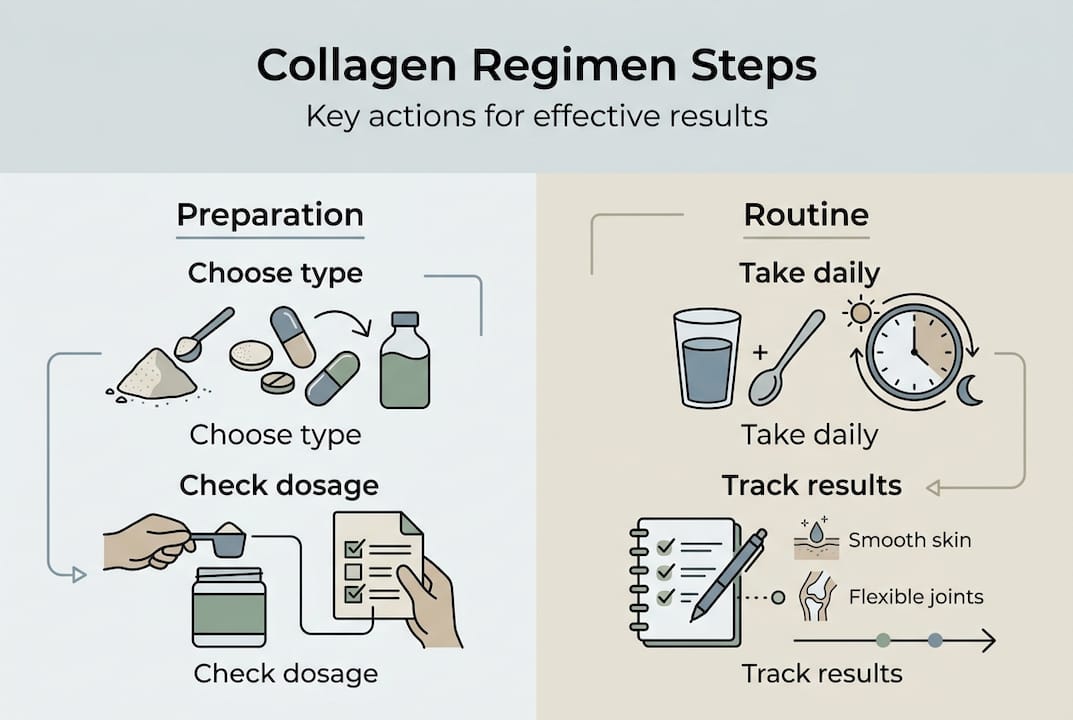
- Morning intake: Take 2.5-5g of hydrolysed collagen peptides with your breakfast, ideally alongside vitamin C-rich foods or supplements to enhance absorption
- Consistency timing: Choose the same time each day to build a reliable habit and maintain steady collagen levels in your system
- Dosage progression: After two weeks at the starting dose, assess your tolerance and consider increasing to 10-15g daily if targeting joint health or fitness recovery
- Evening supplementation: For higher doses, split your intake between morning and evening to optimise absorption and reduce any potential digestive discomfort
- Hydration support: Drink at least 250ml of water with each dose to aid dissolution and absorption
- Progress tracking: Record weekly observations about skin texture, joint comfort, and overall wellness in your tracking system
Research demonstrates that skin hydration and elasticity improve at 1-10g daily, whilst joint pain reduction shows positive outcomes for mild osteoarthritis at higher doses. These findings support a graduated approach based on your specific needs.

| Goal | Daily dosage | Timing | Duration before assessment |
|---|---|---|---|
| Skin hydration and elasticity | 2.5-5g | Morning with vitamin C | 4-6 weeks |
| Joint support and comfort | 10-15g | Split morning/evening | 6-8 weeks |
| Fitness recovery | 10-15g | Post-workout or evening | 4-6 weeks |
| General wellness | 5-10g | Morning | 6-8 weeks |
Pro Tip: Pair your collagen supplement with citrus fruits, berries, or a vitamin C supplement. This combination significantly enhances collagen synthesis in your body, amplifying the benefits you’ll experience from supplementation alone.
Understanding proper collagen intake for skin and joint health requires patience and consistency. Your body needs time to incorporate these peptides into existing structures, rebuild tissue, and demonstrate visible improvements. Athletes and active individuals often notice faster recovery with collagen supplementation, particularly when combined with regular exercise and adequate protein intake.
Adjust your regimen based on personal response. Some individuals thrive on morning doses, whilst others prefer evening supplementation. The key lies in maintaining consistency rather than obsessing over perfect timing. Your body adapts to regular intake patterns, making habitual supplementation more effective than sporadic high doses.
Monitoring results and avoiding common pitfalls
Tracking your progress accurately separates successful supplementation from wasted effort. Collagen benefits accumulate gradually, requiring patience and realistic expectations. Most users need at least 4-8 weeks of consistent intake before observing visible improvements in skin texture, joint comfort, or overall wellness markers.
Individual responses vary significantly due to factors including age, baseline collagen levels, diet quality, and genetic predisposition. Research shows mixed results, with benefits generally modest and skin effects taking several weeks to manifest. Active individuals often report more pronounced joint improvements compared to sedentary users, suggesting lifestyle factors amplify supplementation benefits.
Common mistakes undermine supplementation success:
- Inconsistent intake patterns disrupt the steady collagen supply your body needs for tissue repair and maintenance
- Exceeding recommended doses rarely accelerates results and may cause unnecessary digestive discomfort or expense
- Ignoring overall diet quality whilst relying solely on supplements limits potential benefits
- Expecting dramatic overnight transformations leads to premature discontinuation before benefits appear
- Choosing low-quality products without third-party testing or proper hydrolysation processing
- Failing to track progress objectively through photos, measurements, or symptom journals
Monitor potential side effects carefully during your first month. Mild digestive discomfort affects some users initially, typically resolving as your body adjusts. If bloating or upset persists beyond two weeks, reduce your dosage temporarily before gradually increasing again. This approach allows your digestive system to adapt whilst maintaining supplementation consistency.
“Supplementation is a complement, not a cure. Collagen supports your body’s natural processes but cannot replace proper nutrition, hydration, sleep, and lifestyle choices that form the foundation of genuine wellness.”
Be sceptical of marketing claims promising miraculous transformations or instant results. Whilst collagen supplementation offers legitimate benefits supported by research, it works best as part of a comprehensive wellness strategy. Your supplement buyer’s guide decisions should prioritise quality, transparency, and realistic expectations over sensational promises.
Document your journey through weekly photos focusing on skin texture, joint mobility assessments, and subjective wellness ratings. This objective data helps you evaluate whether supplementation delivers meaningful value for your specific situation. Some individuals respond dramatically, whilst others experience subtle improvements that accumulate over months rather than weeks.
Adjust your regimen based on results. If you notice no changes after eight weeks of consistent use at appropriate doses, consider switching collagen sources, increasing your dosage within safe limits, or evaluating other lifestyle factors that might limit effectiveness. Quality matters tremendously, so investing in properly processed, tested supplements often yields better outcomes than budget alternatives.
Discover our collagen supplement range
Following a structured collagen regimen becomes effortless with the right products designed for convenience and effectiveness. KUDU Nutrition offers hydrolysed collagen supplements specifically formulated to support the skin and joint wellness goals outlined in this guide. Our 20g collagen protein gels deliver substantial doses in convenient single-serve sachets, perfect for consistent daily supplementation.

For those starting their collagen journey, our 14 pack liquid collagen option provides a two-week supply to establish your routine and assess initial tolerance. New users appreciate our trial pack, which allows you to experience our formulation quality before committing to larger quantities. Every product undergoes rigorous third-party testing to ensure purity, potency, and optimal absorption, giving you confidence in your supplementation choice.
Frequently asked questions about collagen supplement regimens
What is the best time of day to take collagen supplements?
Morning or evening intake both work effectively, provided you pair your dose with vitamin C to enhance absorption. Consistency matters far more than exact timing, so choose a schedule you can maintain daily without fail. Splitting higher doses between morning and evening can improve absorption and reduce any potential digestive discomfort.
Are there any side effects to collagen supplements?
Collagen supplements are generally safe for most individuals, though some experience mild bloating or digestive upset during the initial adjustment period. These effects typically resolve within two weeks as your body adapts. Always check for fish or bovine allergies before starting, as reactions can occur in sensitive individuals.
How long does it take to see collagen supplement results?
Visible results usually require 4 to 8 weeks of consistent daily use, with skin improvements often taking longer than joint benefits. Active individuals may notice joint comfort improvements sooner, particularly when combining supplementation with regular exercise. Patience and consistency prove essential for experiencing meaningful benefits.
Can collagen supplements improve joint pain?
Research supports mild joint pain relief and improved recovery, especially in individuals with mild osteoarthritis or exercise-related joint stress. Better outcomes occur when you combine supplementation with physical activity, proper hydration, and overall joint health practices. Results vary individually, but many users report noticeable comfort improvements.
Is marine or bovine collagen better for skin health?
Marine collagen contains smaller peptides that may absorb faster, potentially offering advantages for skin benefits. However, bovine collagen shows excellent results in research and remains widely available at competitive prices. Personal tolerance, dietary preferences, and individual response vary, so experiment to find which marine or bovine option works best for your needs.


