


TL;DR:
- Healthy glowing skin results from consistent hydration, barrier protection, and sun defence rather than trendy products.
- A simple daily routine with gentle cleansing, moisturising, and SPF is scientifically proven to enhance skin radiance over time.
- Adding high-quality collagen supplements can support skin elasticity and moisture but should complement, not replace, foundational habits.
Glowing skin sits at the top of almost every beauty wish list, yet the advice on how to achieve it is often contradictory, expensive, and frustratingly vague. Serums promising “lit-from-within radiance,” masks claiming overnight transformation, and influencer-endorsed routines costing hundreds of pounds each month leave most people no closer to their goal. The truth is that glowing skin comes from improving measurable markers like hydration and elasticity, defending against environmental damage, and building strong foundational habits rather than chasing trends. This guide cuts through the noise with a practical, evidence-based approach that actually works.
Table of Contents
- Understanding ‘glowing skin’: what it really means
- Essential daily skincare: build your glow from the basics
- Collagen supplementation: the evidence and practical approach
- Myth-busting: limits and controversies of collagen for glow
- The real glow advantage: what truly sets lasting radiance apart
- Ready to amplify your glow? Evidence-based collagen options
- Frequently asked questions
Key Takeaways
| Point | Details |
|---|---|
| True glow is barrier health | Lasting radiance depends on skin hydration, elasticity, and protection, not just trendy products. |
| Simple routines work best | Cleanser, moisturiser, and daily sunscreen are the backbone of glowing skin. |
| Collagen helps, but is not magic | Oral collagen may improve hydration and elasticity but is not a replacement for basic care. |
| Evidence over hype | Pay attention to research, realistic dose, and avoid over-promising supplements or treatments. |
Understanding ‘glowing skin’: what it really means
Most marketing around radiance sells you a feeling rather than a biological reality. Brands use the word “glow” to suggest luminosity, youth, and vitality, but none of those words appear in a dermatology textbook. Real glowing skin is measurable. It reflects light evenly, feels plump and smooth to the touch, and shows minimal hyperpigmentation or rough texture. These qualities are direct outcomes of good skin barrier function, sufficient hydration, adequate elasticity, and consistent sun protection.
Dermatology guidance makes this very clear. Foundational skincare steps including gentle cleansing, daily moisturising, and broad-spectrum sun protection are what actually create the “glow” effect, not novelty trend products. Understanding collagen and holistic health also helps you see why skin appearance connects deeply to your overall wellbeing, not just what you apply topically.
Here is a quick-reference overview of the primary contributing factors to radiant skin:
| Factor | What it does | How to support it |
|---|---|---|
| Skin hydration | Keeps cells plump, reduces dullness | Moisturiser, water intake, collagen |
| Skin barrier integrity | Locks in moisture, blocks irritants | Gentle cleansing, ceramide-rich products |
| Elasticity and firmness | Reduces sagging and fine lines | Collagen supplementation, SPF use |
| Sun protection | Prevents UV-induced damage and pigmentation | SPF 30+ daily, reapplication |
| Cell turnover | Removes dead skin for smoother surface | Mild exfoliation, retinoids (with care) |
| Nutrition and sleep | Fuels repair and regeneration | Balanced diet, 7 to 9 hours of sleep |
Notice that the table above does not mention highlighter, expensive facial oils, or viral skincare gadgets. Every factor here is something you can directly influence with consistent, low-cost habits. Glowing skin is far less mysterious than the beauty industry wants you to believe.
Key principles to hold on to:
- Radiance is a result of skin health, not a product you can buy outright
- Barrier protection and sun defence are non-negotiable foundations
- Supplements like collagen work best when layered on top of a strong baseline routine
- Consistency over weeks and months matters far more than any single product
Essential daily skincare: build your glow from the basics
With a clear definition, let us move into the foundation: your daily routine for natural luminosity. A well-structured daily practice takes roughly five minutes morning and evening, yet it consistently outperforms elaborate multi-step regimens when it comes to visible results. The science is unambiguous here.
Dermatologist-recommended routines centre on three pillars: a gentle cleanser, a fragrance-free moisturiser, and a broad-spectrum sunscreen rated SPF 30 or higher applied every single morning. Harsh cleansers strip the skin’s natural oils, weaken the barrier, and paradoxically cause more oil production and irritation. Moisturiser replenishes what the environment takes away. Sunscreen is, without question, the single most powerful anti-ageing and glow-preserving tool available. No supplement or serum outperforms it.
Here is a straightforward daily regimen to follow:
- Morning cleanse with a mild, pH-balanced cleanser. Avoid anything that leaves skin feeling tight or squeaky.
- Apply a lightweight moisturiser containing hyaluronic acid or glycerin to draw water into the skin.
- Apply SPF 30 or higher broad-spectrum sunscreen as the final morning step. This is not optional.
- Evening cleanse to remove sunscreen, pollution, and makeup without scrubbing aggressively.
- Apply a richer moisturiser or barrier cream at night to support overnight repair.
- Optional weekly step: a gentle exfoliant (lactic acid or a low-percentage AHA) to encourage cell turnover. Once or twice per week is sufficient.
Pro Tip: Facial masks are a treat, not a treatment. A hydrating sheet mask once a week can give your skin a short-term plumpness boost, but it does not replace daily moisturising. If you are trying to cut spending, skip the masks and invest in a better daily moisturiser instead. Your baseline hydration will deliver far more visible results.
A word of caution on exfoliation. If your skin is currently irritated, sunburned, dealing with active breakouts, or managing a condition like rosacea or eczema, aggressive exfoliation will worsen your barrier damage rather than improve it. Always start with the gentlest possible option and introduce new active ingredients slowly, one at a time.
Pairing these collagen-boosting lifestyle habits with your daily routine creates a compounding effect. Sleep, hydration, stress management, and diet all influence how your skin looks on any given morning. The routine above is the structure; your lifestyle habits are the fuel.
Collagen supplementation: the evidence and practical approach
Once your base routine is in place, it is time to explore whether, and how, collagen can enhance your glow. Oral collagen supplementation has attracted significant research interest over the past decade, and the results are genuinely encouraging, though they come with important nuance.

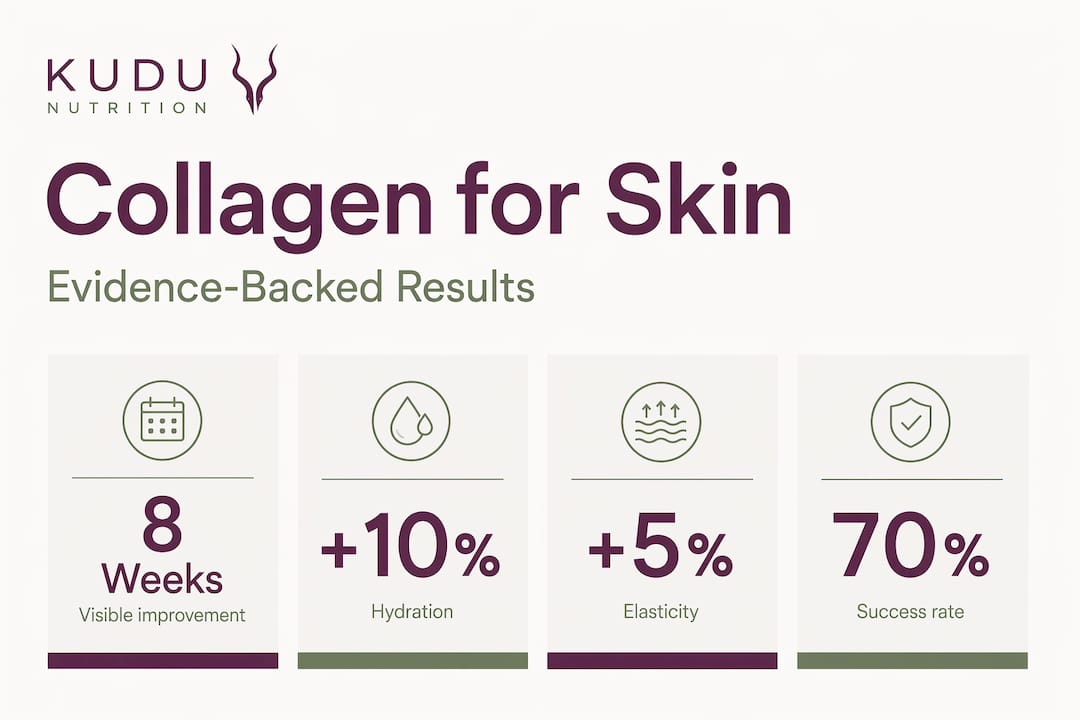
A systematic review and meta-analysis of collagen-based supplements found statistically significant average improvements in skin hydration and elasticity, with a commonly studied dosage of approximately 4 grams per day. This is meaningful data, not anecdote. Beyond that, an individual randomised controlled trial demonstrated measurable improvements in skin moisture, elasticity, and related visible parameters after oral low-molecular-weight collagen peptide supplementation. For anyone aiming for a lasting glow, these are the two types of evidence that matter most.
Here is how common supplement types compare:
| Form | Absorption | Convenience | Evidence strength |
|---|---|---|---|
| Liquid collagen sachets | High (pre-hydrolysed peptides) | Very easy, portable | Strong for skin outcomes |
| Collagen powder | Good when mixed with liquid | Requires preparation | Well-studied |
| Collagen capsules/tablets | Moderate | Easy daily habit | Good for lower doses |
| Topical collagen creams | Poor (molecule too large) | Effortless application | Weak for deep skin layers |
Liquid formats, such as KUDU Nutrition’s collagen protein sachets, offer convenience and typically high collagen content per serving. For the skin-focused user, learning about collagen peptide benefits helps clarify why the molecular weight and hydrolysation process matter so much for absorption and bioavailability.
If you are new to supplementation, it also pays to understand safe use of peptides and how to introduce them sensibly into your routine.
When choosing and starting a collagen supplement, keep these points in mind:
- Prioritise hydrolysed collagen peptides, as they are broken down into smaller molecules that the body absorbs more efficiently
- Consistency matters above all else. Studies typically run for 8 to 12 weeks before significant changes become measurable
- Look for quality certification. Informed Sport certification, for example, indicates that a product has been independently tested for banned substances and purity
- Start with one supplement. Avoid adding multiple new products simultaneously so you can accurately attribute any changes you observe
- Combine with vitamin C intake, as this nutrient is essential for your body’s own collagen synthesis
Building a sustainable collagen regimen for beauty is a gradual process. Expect subtle improvements in skin plumpness and moisture within the first four weeks, with more noticeable elasticity changes from week eight onwards.
Myth-busting: limits and controversies of collagen for glow
Having seen what collagen can realistically provide, it is equally vital to separate science from hype. The supplement market is prone to overclaiming, and collagen is no exception.
Expert commentary from Cedars-Sinai makes clear that evidence for collagen supplements “reversing” ageing is not definitive. Improvements in hydration and elasticity are well-supported; the idea that a daily sachet will turn back the clock by a decade is not. More critically, a 2026 summary from Tufts University dermatology researchers concluded that higher-quality studies show limited benefit and that oral collagen is not currently recommended as a treatment for skin ageing. That is an important and sobering counterpoint.
The collagen and anti-ageing evidence picture is nuanced: modest, real benefits exist, but they are not transformative on their own. Several limitations in the research are worth knowing:
- Short study durations. Many trials run for only 8 to 12 weeks, which may not capture long-term efficacy or safety.
- Small sample sizes. Several positive studies involve fewer than 100 participants, which limits how confidently results can be generalised.
- Industry funding. A notable proportion of collagen supplement research is funded by manufacturers, which introduces potential bias even in peer-reviewed work.
- Absorption variability. Not everyone absorbs and utilises collagen peptides equally. Gut health, age, and overall nutrition all affect how much of a supplement actually reaches the skin.
- No standardised outcome measures. Different trials measure “glow” differently, making direct comparisons difficult.
Pro Tip: If you have been supplementing for 12 weeks with no noticeable change in skin texture or hydration, book a consultation with a dermatologist rather than simply buying a more expensive product. A professional can identify whether a barrier issue, nutritional deficiency, or underlying skin condition is preventing your skin from responding to supplements.
Common pitfalls to avoid when supplementing for skin glow:
- Expecting results within days rather than weeks
- Taking collagen without also addressing sun protection (the most common mistake)
- Choosing a product without checking quality certification or ingredient transparency
- Neglecting sleep and nutrition while relying solely on supplements
- Assuming more is better: very high doses have not been shown to provide proportionally greater results
The real glow advantage: what truly sets lasting radiance apart
Here is the perspective that most beauty content refuses to offer: the supplement market, the influencer economy, and the skincare industry all profit from complexity. Every time they can convince you that you need one more product, one more targeted treatment, or one more trending ingredient, they succeed. The unfortunate consequence is that millions of people are spending money and energy on micro-optimisations while neglecting the foundations that actually produce results.
In our experience working with health-conscious individuals focused on skin health, the people with genuinely radiant complexions are almost never those with the most elaborate routines. They are the ones who cleanse gently every night without fail, apply their SPF every single morning regardless of the weather, sleep consistently, drink enough water, and take a well-chosen, certified supplement that fits their lifestyle. That is it. The consistency is the secret, not the complexity.
The overlooked variables are rest and nutrition. Sleep is when your skin undergoes the bulk of its cellular repair. Chronic sleep deprivation measurably impairs barrier function, elevates cortisol (which breaks down collagen), and reduces microcirculation, the very thing that gives skin its healthy flush. Similarly, a diet rich in vitamin C, zinc, and antioxidants supports your body’s own collagen production and protects existing skin proteins from oxidative damage.
Sun avoidance and daily SPF use remain the single most evidence-backed interventions for preserving radiance over time. UV radiation is the primary cause of collagen degradation, hyperpigmentation, and loss of skin elasticity. Any holistic skin health perspective that does not place sun protection at its centre is incomplete.
Collagen supplements earn their place in this picture, but as a targeted addition to a strong routine, not a replacement for one. Used consistently, in appropriate doses, from a certified and transparent source, they offer real, measurable support for skin hydration and elasticity. That is genuinely valuable. Just do not let the search for the perfect supplement distract you from the non-negotiable basics.
Ready to amplify your glow? Evidence-based collagen options
If you have built your foundational routine and are ready to add targeted collagen support, choosing a high-quality, transparently formulated product makes all the difference to your results.
At KUDU Nutrition, we offer 20g collagen protein gels designed for people who want serious collagen content in a convenient, great-tasting format. Each sachet delivers a potent dose of hydrolysed collagen peptides with full ingredient transparency and Informed Sport certification, giving you complete confidence in what you are taking. Explore our liquid collagen protein packs for an easy way to trial a consistent 14-day routine. To learn more about how our products support skin, joints, and overall beauty from within, visit our dedicated collagen and beauty page and find the option that fits your lifestyle best.
Frequently asked questions
How quickly will I see results from collagen for my skin?
Visible improvements can appear in as little as 8 weeks with consistent daily intake, based on findings from randomised controlled trials measuring moisture and elasticity.
What is the ideal daily dose of collagen to achieve a glow?
Studies commonly use around 4 grams per day, though effective ranges across trials span from approximately 1 gram to 10 grams depending on the product and outcome measured.
Can collagen reverse the signs of ageing?
Evidence does not support the claim that collagen reverses ageing definitively, though consistent supplementation can meaningfully improve hydration and elasticity over time.
Should I use collagen if I have sensitive or problem-prone skin?
If you have active acne, eczema, or rosacea, prioritise gentle cleansing and a fragrance-free moisturiser first, and consult a dermatologist before introducing any new supplement.
Is topical collagen cream or oral supplement more effective?
Oral collagen supplements have considerably stronger clinical evidence for improving skin hydration and elasticity, as topical collagen molecules are generally too large to penetrate meaningfully beyond the skin’s surface.