


TL;DR:
- Bioactive proteins contain short peptides that activate specific biological effects after digestion, unlike standard dietary proteins. Clinical evidence shows that collagen peptides at effective doses improve joint pain, skin hydration, and elasticity over several weeks by stimulating tissue synthesis and modulating inflammatory pathways. Consistent intake of low molecular weight hydrolyzed collagen, combined with vitamin C and post-exercise timing, maximizes these targeted health benefits.
Not all proteins are equal, and the difference matters enormously for your skin, joints, and recovery. Bioactive protein is a specific class of naturally occurring protein that contains short peptide sequences capable of triggering targeted biological effects in your body. Unlike standard dietary protein, which your body breaks down purely for energy and muscle building, bioactive proteins unlock precise health functions once enzymatic digestion frees the active peptides within them. If you have been taking collagen supplements and wondering exactly what makes them work, this is where the science becomes genuinely useful.
Table of Contents
- Understanding bioactive proteins and how they work
- Clinical evidence of collagen peptides for joint and skin health
- How bioactive peptides enhance skin, joint, and recovery benefits beyond nutrition
- Choosing and using bioactive protein supplements effectively
- Why bioactive proteins are the future of functional nutrition
- Explore collagen protein supplements for skin, joint and recovery support
- Frequently asked questions
Key Takeaways
| Point | Details |
|---|---|
| Bioactive protein basics | Bioactive proteins release functional peptides during digestion that influence health beyond nutrition. |
| Collagen peptides benefits | Specific collagen peptides reduce joint pain and improve skin hydration clinically. |
| Mechanisms of action | Bioactive peptides stimulate cartilage and skin cells to produce collagen and reduce inflammation. |
| Supplement best practices | Use low molecular weight collagen peptides with vitamin C and exercise for optimal results. |
| Future nutrition trends | Bioactive proteins are advancing personalised and functional nutrition science. |
Understanding bioactive proteins and how they work
The term “bioactive protein” describes proteins that carry embedded peptide sequences with the ability to produce specific physiological effects. The key distinction is this: the protein itself is inactive until digestion or processing releases these sequences. Once freed through enzymatic hydrolysis, the peptides act on receptors, enzymes, and metabolic pathways throughout your body.
According to food science research, bioactive proteins contain short peptides of between 2 and 20 amino acids that exert specific biological effects only after enzymatic cleavage during digestion, food processing, or fermentation, with activity being both dose and sequence dependent. That last point deserves emphasis. The same protein source can produce dramatically different effects depending on how it is processed and at what dose you consume it.
Here is what makes bioactive proteins functionally different from standard dietary proteins:
- They regulate metabolic pathways rather than simply supplying amino acid building blocks
- Their effects are sequence-specific, meaning the order of amino acids within the peptide determines the health effect
- Activation requires enzymatic hydrolysis, either during digestion or during controlled food processing such as fermentation
- They exhibit antioxidant, anti-inflammatory, and immunomodulatory properties depending on their source and structure
- Dose determines response, so the clinical benefits you read about are tied to specific quantities, not vague “high protein” intake
Collagen is the most studied source of bioactive protein in the context of skin and joint health, and understanding the collagen digestion process clarifies why hydrolysed collagen products behave so differently from raw collagen or generic protein powders.
Clinical evidence of collagen peptides for joint and skin health
With a clear understanding of bioactive proteins, we now move to the clinical data. This is where the conversation shifts from theory to measurable outcomes.
For joint health, the evidence is compelling. A 2025 clinical trial found that daily 3g of low-molecular-weight collagen peptides over 180 days reduced WOMAC pain scores and improved function in 90% of knee osteoarthritis patients with grade I or II joint damage. Three grams is a modest dose by supplement standards, which makes these results particularly notable.
Scaling up the dose amplifies the results. A 2024 meta-analysis of 35 randomised controlled trials found that collagen peptides at 10g or more per day reduced pain and stiffness by 20 to 40%, with greater reductions seen in trials lasting 12 weeks or longer. Duration and consistency, not just dosage, determine how much benefit you receive.
Skin outcomes are equally well documented. Research published in 2025 confirmed that oral collagen peptides at 10g daily for eight weeks increased skin hydration and elasticity by 20 to 30% in adults aged 65 and over. Younger adults and athletes show comparable improvements, though the baseline difference is smaller.
The table below summarises key findings across major collagen peptide trials to help you compare doses and outcomes:
| Dose | Duration | Primary outcome | Improvement |
|---|---|---|---|
| 3g daily | 180 days | Knee OA pain and function | 90% of patients improved |
| 10g daily | 8 weeks | Skin hydration and elasticity | 20 to 30% increase |
| 10g+ daily | 12+ weeks | Joint pain and stiffness | 20 to 40% reduction |
The pattern here is consistent. Whether the target is skin or joint health, bioactive collagen peptides produce measurable results when used at clinically relevant doses for sufficient durations.
How bioactive peptides enhance skin, joint, and recovery benefits beyond nutrition
Understanding the clinical benefits leads naturally to the underlying mechanisms. Bioactive peptides are not simply raw material. They act as signalling molecules, communicating directly with cells to trigger repair and synthesis processes.
Research confirms that bioactive peptides modulate metabolic pathways through enzyme and receptor interactions, displaying antioxidant, anti-inflammatory, and immunomodulatory effects. In practical terms, this means a collagen peptide taken orally does not just sit in your bloodstream as amino acid surplus. It reaches target tissues and switches on specific cellular responses.
Here is how that plays out for skin and joint health specifically:
- Chondrocyte stimulation: Collagen peptides activate cartilage cells to produce new collagen and proteoglycans, the structural proteins that cushion joints and maintain tissue integrity
- Fibroblast activation: In skin, peptides stimulate fibroblasts to synthesise collagen and elastin, improving firmness and hydration
- ECM support: Both processes restore the extracellular matrix, the scaffolding that holds tissue together and maintains function
- Inflammation modulation: Bioactive peptides suppress pro-inflammatory cytokines, reducing the chronic low-grade inflammation that accelerates joint and skin degradation
- Antioxidant activity: They neutralise free radicals that break down collagen fibres and impair cell signalling
One factor that significantly boosts these effects is vitamin C. Evidence shows that collagen peptide bioactivity with vitamin C co-supplementation enhances skin elasticity and joint function outcomes by 20 to 50%. Vitamin C is a necessary cofactor in collagen synthesis, and without it, even high-quality bioactive peptides cannot reach their full potential. For a deeper look at this interaction, the guide on vitamin C and collagen synthesis is worth reading.
Pro Tip: Take your collagen supplement alongside a vitamin C source, whether a supplement or a glass of fresh orange juice. It is one of the simplest ways to meaningfully increase the return on your investment.

You can also explore more about optimising collagen bioactivity to get the most from your supplement routine.
Choosing and using bioactive protein supplements effectively
Now that you understand how bioactive proteins work, here is how to choose and use them so that the science translates into real results for you.
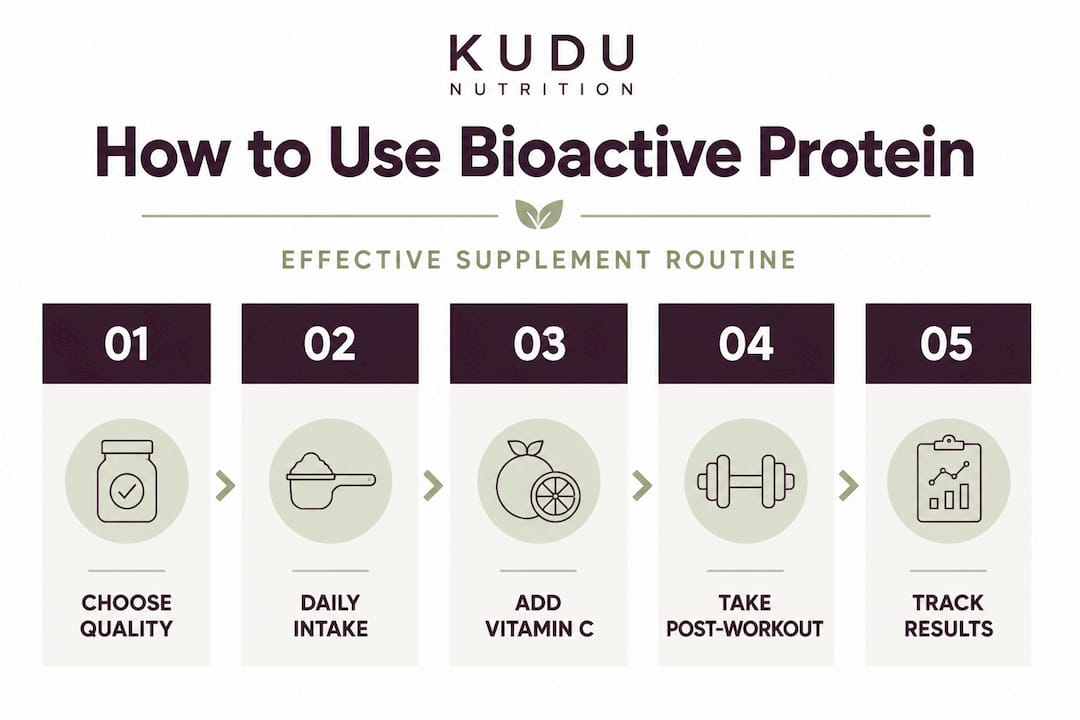
The single most important factor in selecting a collagen supplement is molecular weight. Research shows that low molecular weight collagen peptides under 3kDa survive digestion more effectively and stimulate cartilage repair more efficiently, particularly when combined with resistance training. Larger fragments are less reliably absorbed and less likely to reach target tissues intact.
Follow these practices to get the most from your supplement:
- Choose hydrolysed collagen with low molecular weight peptides, not raw collagen or gelatin, which require full digestion and produce inconsistent peptide fragments
- Start at 3g daily for joint support, moving to 10g or more per day if your primary goals are skin hydration, elasticity, or post-training recovery
- Commit to at least 8 to 12 weeks before evaluating results; collagen turnover is slow and short-term use rarely reflects the full benefit
- Pair supplementation with resistance training, as mechanical load on joints and connective tissue enhances the cellular response to collagen peptides
- Avoid supplements providing only free amino acids for skin and joint goals; intact peptide sequences are biologically essential for the signalling effects discussed above
- Add vitamin C to each serving to support collagen synthesis in target tissues
- Take your supplement consistently, not sporadically; the dose-dependent nature of bioactive peptides means irregular intake breaks the cumulative biological response
Timing also matters. Studies confirm that post-exercise collagen peptides outperform free amino acids in cartilage turnover and joint health outcomes. The post-workout window, when blood flow to connective tissue is elevated, is an ideal point of entry for bioactive peptides.
Pro Tip: If you train regularly, take your collagen supplement within 30 to 60 minutes after a workout. The increased blood flow to connective tissue during this window makes uptake and utilisation significantly more efficient.
For a structured approach to daily intake, the collagen intake guide walks you through the process step by step. You can also review lifestyle habits that support collagen to build a routine that reinforces your supplementation.
Why bioactive proteins are the future of functional nutrition
Most people still think of protein in a single dimension: how much did I eat today? That framing served us reasonably well when the primary concern was preventing deficiency. It does not serve us at all when the goal is recovering faster, maintaining cartilage integrity into your fifties, or keeping skin genuinely elastic rather than just moisturised on the surface.
The conventional view of proteins as nutritional units, measured in grams and valued for amino acid content, is outdated. The emerging role of bioactive proteins is that of a bridge between traditional dietary wisdom and modern nutritional science, offering targeted health benefits for diverse populations. That framing should change how you evaluate any protein product.
“Bioactive proteins represent a bridge between traditional dietary wisdom and modern nutritional science, offering practical health benefits for diverse populations.” — MDPI, Foods journal review, 2025
What this means in practice is that the functional supplement market will increasingly move towards specific peptide sequences validated for specific outcomes, rather than generic protein content. Personalised nutrition using bioactive peptides is already emerging from research settings into consumer products. The question is not whether bioactive proteins matter; the clinical data has settled that. The challenge is distinguishing products with genuine bioactive content and credible sourcing from those borrowing the language without the substance.
For consumers, this means asking sharper questions: what is the molecular weight of the peptides? Is this product tested by a credible third party? What clinical doses were used in the studies cited? Brands that cannot answer these questions clearly are not selling bioactive protein. They are selling marketing.
For more on the holistic benefits of collagen across skin, joints, and overall wellbeing, explore our editorial content directly.
Explore collagen protein supplements for skin, joint and recovery support
To put your understanding into action, explore KUDU Nutrition’s range of collagen supplements, designed for people who want bioactive results, not just protein grams on a label.

KUDU Nutrition formulates with bioactive collagen peptides at clinically relevant doses, and all products are Informed Sport certified for quality assurance. Whether your priority is skin, joint support, or post-training recovery, there is a format designed for your routine:
- 20g liquid collagen protein: A high-dose collagen sachet delivering 20g of hydrolysed collagen peptides per serving, ideal for recovery and joint support
- Collagen protein gels: Portable, convenient formats suited to on-the-go athletes and post-workout routines
- Collagen and beauty blends: Targeted formulations combining bioactive peptides with skin-supporting nutrients for visible results
Every product is built around ingredient transparency and evidence-backed dosing, so you can apply what you have learned here directly.
Frequently asked questions
What exactly is bioactive protein?
Bioactive protein is a naturally occurring protein with short peptides that become biologically active only after enzymatic cleavage during digestion or processing, producing specific health effects beyond basic nutrition such as antioxidant, anti-inflammatory, and tissue-repair responses.
How do collagen peptides help with joint pain?
Collagen peptides stimulate chondrocytes to produce collagen and extracellular matrix components, reducing pain and improving joint function. Clinical trials confirm that hydrolysed collagen relieves knee osteoarthritis pain significantly within six months at even modest doses.
Can bioactive proteins improve skin health?
Yes. Oral collagen peptides increase skin hydration and elasticity by 20 to 30% over eight weeks by stimulating fibroblast activity and collagen synthesis directly within skin tissue, with measurable improvements in adults of all ages.
How should I take bioactive protein supplements for best results?
Take low molecular weight collagen peptides consistently for 8 to 12 weeks, post-exercise when possible, alongside vitamin C supplementation. Research confirms that post-exercise collagen peptides support tissue synthesis more effectively than free amino acids for cartilage and connective tissue recovery.